

Drive along a blackwater river anywhere in the NC coastal plain and you'll see them standing in the water, wide-footed and rust colored in fall. Bald Cypress (Taxodium distichum) looks like it belongs somewhere older and stranger than a regular forest, and in one North Carolina river, that's not far off. Some of the oldest living trees in eastern North America are growing right here, and most people driving past them have no idea.
This post covers what makes Bald Cypress unusual: its age, its odd "knees," and the role it plays for the wildlife that depends on it.
A Conifer That Goes Bald
Bald Cypress looks evergreen through summer, with soft, feathery needles lining each branch. Then fall comes and the needles turn cinnamon-orange and drop, leaving bare branches through winter. That's where the common name comes from. It's one of the only deciduous conifers native to the Southeast, and it makes the tree easy to pick out of a swamp treeline in January when everything else evergreen is still holding its needles (NC State Extension Plant Toolbox).
Left alone, it grows into a wide, buttressed base that tapers up a straight trunk, often 50 to 70 feet tall. Give it a few centuries and that base gets massive. Give it a few thousand years, and you get what's living on the Black River.
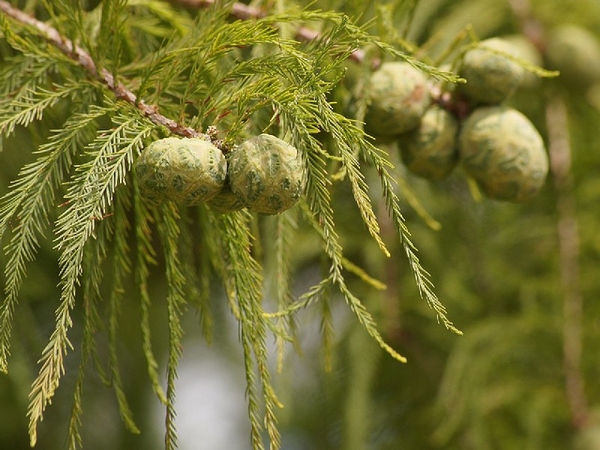
A long-lived deciduous conifer of southern swamps and blackwater rivers. Tolerates standing water and flooding that would kill most trees, and anchors some of the oldest wetland forests on the continent.
The Oldest Trees East of the Mississippi
In a forested wetland preserve along the Black River south of Raleigh, researchers led by dendrochronologist David Stahle have been coring Bald Cypress trees since 1985. In 2017, they documented a tree at least 2,624 years old, using tree-ring counts backed by radiocarbon dating. That makes it the oldest known living tree in eastern North America, and one of the oldest wetland trees on Earth (University of Arkansas).
Stahle's team had already found trees over 1,000 years old on the same river, including one nicknamed Methuselah, more than 1,600 years old at the time it was cored. These trees were alive before the fall of Rome. They're still standing in a swamp two hours from Wilmington, still adding a ring a year, still recording centuries of drought and flood in their wood.
Those Knees Everyone Asks About
Anyone who has walked a cypress swamp knows the knees: knobby, woody growths that rise out of the water or mud around the base of the tree, sometimes several feet tall. For decades the working theory was that they helped the roots breathe in waterlogged soil, acting like snorkels. More recent anatomical work complicates that story. Knees appear to aerate internal tissue within the knee itself rather than pump oxygen down to submerged roots, and some researchers now think starch storage is a bigger part of the job than breathing (Arnold Arboretum, Harvard University).
In other words, botanists still don't fully agree on what cypress knees are for. That's a good reminder that even a tree this well studied still has open questions. If someone tells you with total confidence exactly what the knees do, they're oversimplifying current research.
Who Actually Needs This Tree
Bald Cypress isn't just scenery. Its seeds are a winter food source for wood ducks, along with wild turkey and squirrels, and its hollow trunks provide nesting cavities that wood ducks rely on directly, alongside species like sycamore and tupelo (NC State Extension). Herons, egrets, and ospreys nest in the crowns of older trees standing over open water, and the flooded understory beneath a cypress stand shelters frogs, salamanders, and other wetland species that need standing water part of the year.
None of that shows up if you just glance at the tree from a car window. It's a slow, unglamorous kind of habitat value, the kind that depends on the tree being left standing for decades or centuries, not planted and replaced on a landscaping schedule.
Growing It Yourself
Bald Cypress isn't limited to true swamps. It tolerates a wide range of soil conditions, from wet standing water to average garden soil, and it's more drought tolerant once established than its swamp reputation suggests. It's a legitimate shade tree option for a coastal NC yard with room to grow, not just a species for waterfront property. Just give it space. A tree built to outlive empires needs room to become what it's going to become.
Related Reading
More native plant guides from The Plant Ecologist
Sources Cited
Taxodium distichum — NC State Extension Gardener Plant Toolbox
Researchers Document the Oldest Known Trees in Eastern North America — University of Arkansas
The Knees of the Bald Cypress: A New Theory of Their Function — Arnold Arboretum, Harvard University