
Most pollinators are generalists. They visit whatever is blooming. But a smaller, quieter group of native bees are specialists — they can only gather pollen from one plant family, or even one genus. Without the right native plants, they do not reproduce. Lanceleaf Coreopsis (Coreopsis lanceolata) is one of those plants.
This post covers the ecology behind Lanceleaf Coreopsis and a handful of other spring-blooming NC natives that feed insects most people have never noticed, and what happens to those insects when the plants disappear.
Lanceleaf Coreopsis: More Than a Yellow Flower
Lanceleaf Coreopsis (Coreopsis lanceolata) blooms from April through June across the NC coastal plain and piedmont. It tolerates drought, thrives in poor sandy soils, and reseeds into stable colonies without much help. Gardeners call it low-maintenance. Ecologists call it a keystone wildflower.
The pollen is specialized. Melissodes bees — a group of long-horned native bees in the family Apidae — are among the primary specialist visitors to Coreopsis. Where generalist bees treat this flower like anything else in bloom, Melissodes females pack Coreopsis pollen into their brood cells and provision their larvae with little else. No Coreopsis, no larvae.
There is also the wavy-lined emerald moth (Synchlora aerata). The caterpillars cut small pieces of flower petals from Coreopsis and related composites and attach them to their own bodies as camouflage. A caterpillar sitting in a flower head is nearly invisible. Remove the flowers and the strategy fails entirely.
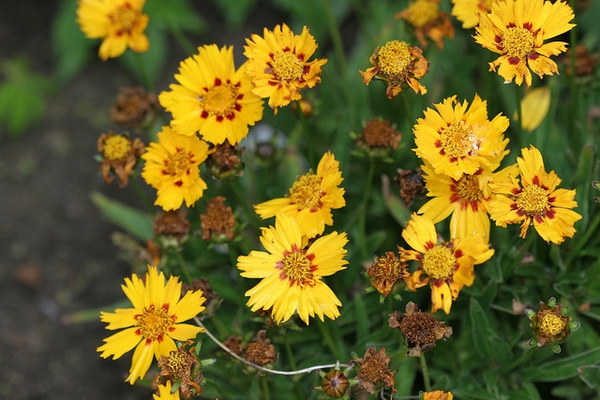
A spring-blooming perennial native to the NC coastal plain and piedmont. Drought tolerant, long-lived, and a specialist host for Melissodes bees and the wavy-lined emerald moth. Excellent in meadows, roadsides, and sandy garden beds.
What Specialist Insects Tell Us About Ecosystem Health
Generalist pollinators adapt when landscapes change. They move to the next available flower. Specialist bees cannot. They are ecological indicators — when they disappear from an area, the plant they depend on has usually gone first.
In the NC coastal plain, this matters more than most places. Longleaf pine savanna and open meadow habitat are among the most biodiverse ecosystems in North America, and also among the most fragmented. Many of the native wildflowers that once covered these landscapes in spring — including Coreopsis, native Penstemon, and wild Phlox — now persist in remnant patches along roadsides and in managed natural areas. The specialist insects track the plants.
Planting these species in home gardens and landscapes extends the habitat network. It gives specialist species places to survive outside of managed preserves. The scale of a backyard planting is small, but it is not nothing.
Other NC Native Spring Wildflowers Worth Growing
Each of these supports native bees, moths, or butterflies with specific plant-insect relationships.
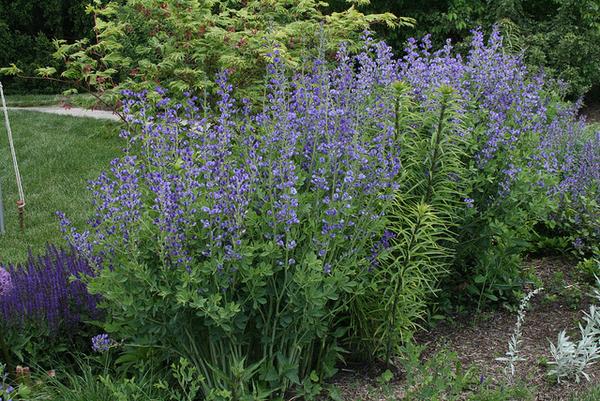
Host plant for the Wild Indigo Duskywing (Erynnis baptisiae) and the Clouded Sulphur butterfly. Blooms April through May. Slow to establish but extremely long-lived once rooted. Best in full sun with well-drained soil.
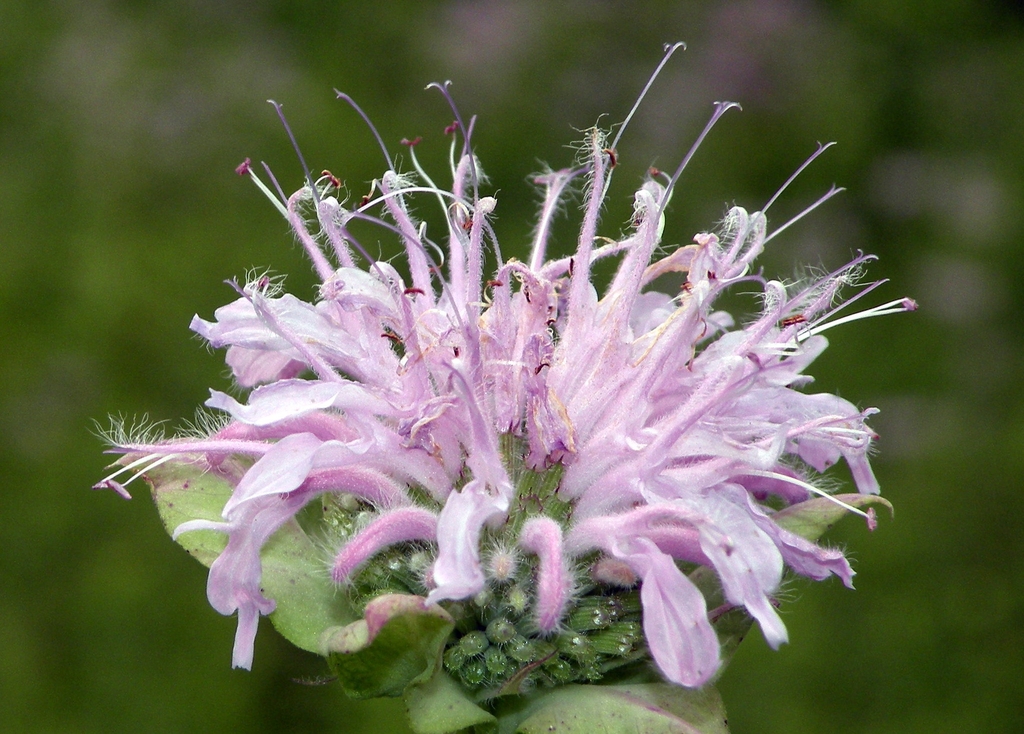
Blooms June through August and draws bumble bees, sweat bees, hummingbirds, and sphinx moths. Strong candidate for a follow-on bloom after Coreopsis finishes. Prefers full sun in well-drained soils.
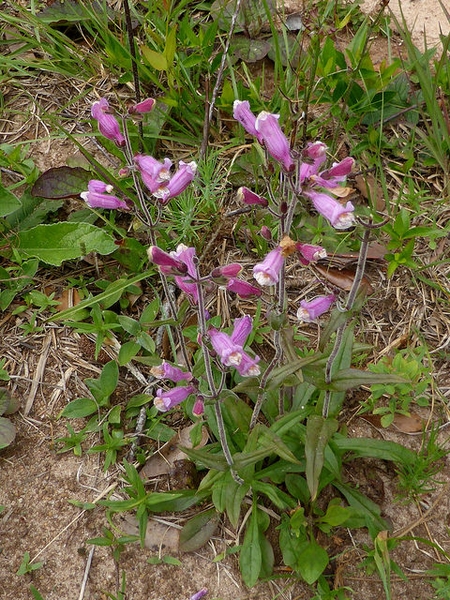
One of the earliest-blooming native Penstemon species in the Southeast. The tubular flowers favor long-tongued native bees that can reach the nectar. Sandy soils, full sun, very drought tolerant once established. Rarely found in retail nurseries.
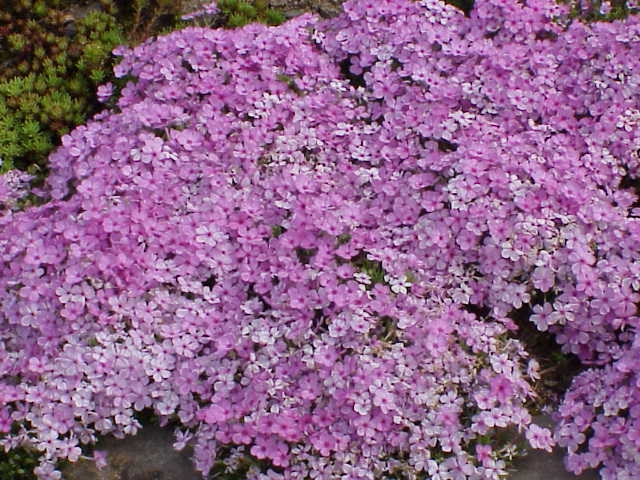
Fragrant pink to lavender flowers in late spring and early summer. Attracts Sphinx moths and native butterflies. Spreads into clumps over time. Prefers moist, well-drained soil in partial to full sun.
Where to Start
Lanceleaf Coreopsis is one of the easiest entry points for coastal NC native planting. It germinates reliably from seed, handles sandy or depleted soils, and comes back stronger each year. Pair it with Wild Blue Indigo and Southeastern Beardtongue for a bloom sequence that covers specialist needs from April through June.
These plants are increasingly available at native plant sales and botanical garden sales across NC. If you cannot find Penstemon australis locally, check with native plant nurseries that specialize in coastal plain species — availability has improved in recent years.