
North Carolina supports hundreds of native bee species. Most people picture a honeybee when they think about pollinators, but honeybees are European. They arrived with colonists in the 1600s. Every bee that existed in North Carolina before then evolved alongside native plants, and many of those species still depend on specific native plant genera to complete their life cycles.
If you want native bees in your yard, the plant list matters. This guide covers the native species that make the biggest difference for NC bee diversity, particularly in the Piedmont and Coastal Plain.
Specialist Bees Cannot Use Just Any Flower
Generalist bees forage across many plant families. Specialist bees, called oligoleges, collect pollen from a narrow range of plant genera or families. A specialist bee that evolved to use goldenrod cannot simply switch to a non-native ornamental when goldenrod disappears from the landscape. There are no substitutes.
North Carolina's native bee fauna includes many specialist species tied to native plant genera like Baptisia, Solidago, Asclepias, and Symphyotrichum. Removing those plant genera from a yard does not just reduce food options. It removes the only plants those bees can use for reproduction.
Start with Wild Indigo
A nitrogen-fixing perennial that supports specialist bees from its first bloom.
Blue Wild Indigo (Baptisia australis) blooms in late spring with tall violet-blue flower spikes. It fixes nitrogen through root associations with soil bacteria, improving soil fertility as it matures. The plant also serves as a larval host for several native moth and butterfly species. For native bees, it is a critical pollen source for bumble bees, small carpenter bees (Ceratina spp.), and several specialist bee species that rely on the Baptisia genus during breeding season.
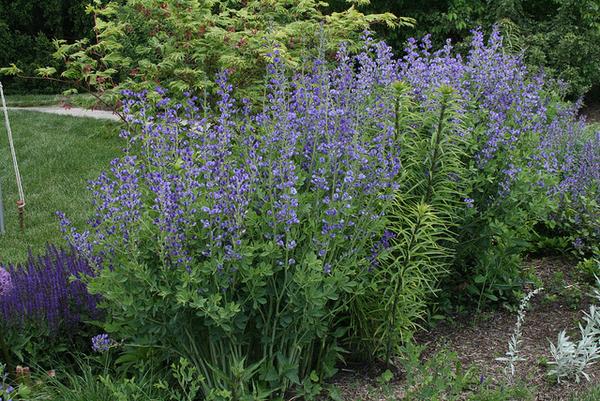
A long-lived native perennial with nitrogen-fixing roots and violet-blue flower spikes blooming late April through June. Specialist pollen source for bumble bees and small carpenter bees. Tolerates a range of soil conditions once established and improves over many years.
Four More Plants Worth Adding
Each serves a different group of native bees at a different point in the season.
No single plant feeds every bee species. A mix of bloom times and flower structures is what keeps bee diversity high throughout the growing season. The four below fill gaps that generalist garden plants cannot cover.
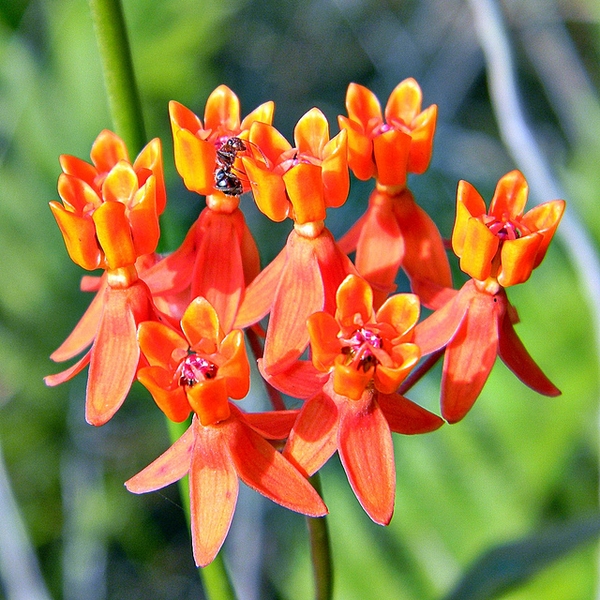
Bright orange flower clusters bloom in early summer. Critical pollen source for specialist milkweed bees and a monarch butterfly host plant. Thrives in poor, dry soils. Do not disturb the taproot once established.
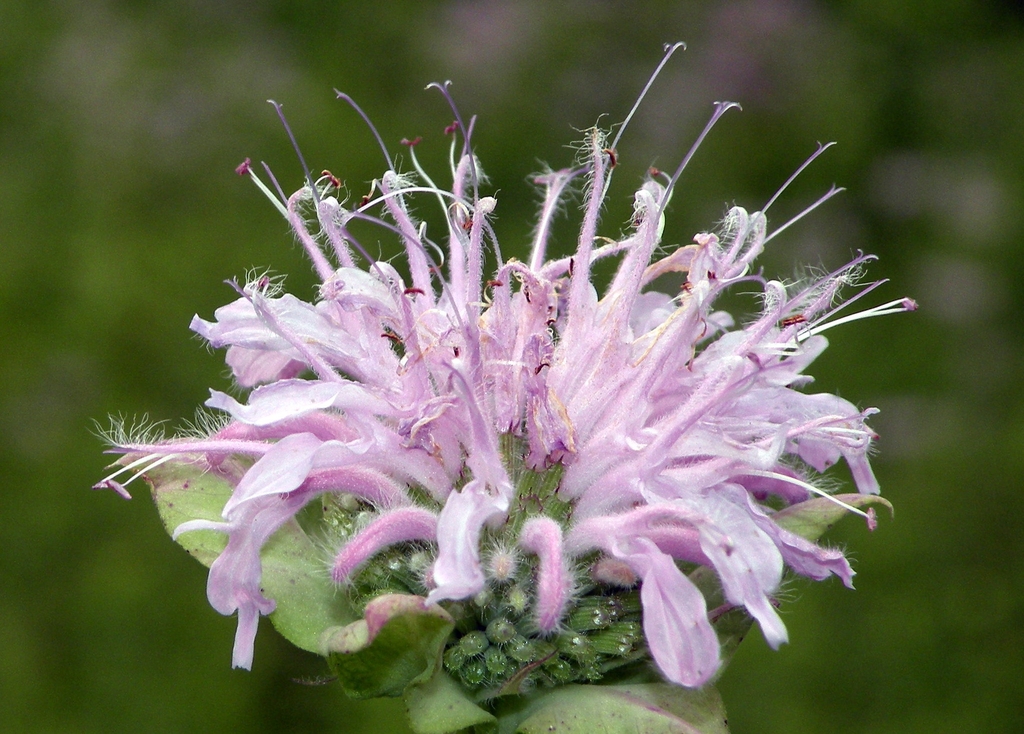
The tubular flower structure of Wild Bergamot favors long-tongued bees, including bumble bees and leafcutter bees. Blooms July through August when many other native wildflowers have finished. Spreads slowly by rhizome and handles dry to medium soils well.
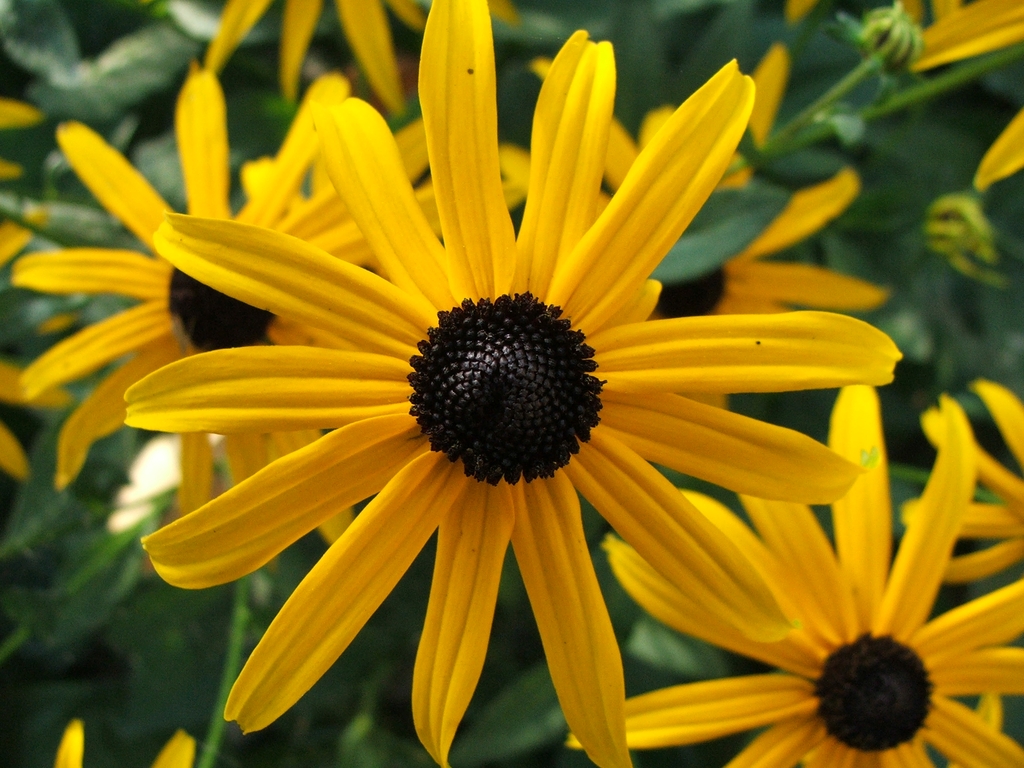
Open, accessible flower heads that generalist bees can use without specialized anatomy. Long bloom period from June into September. Easy to establish from seed. Works well as a bridge species between more specialized plantings.
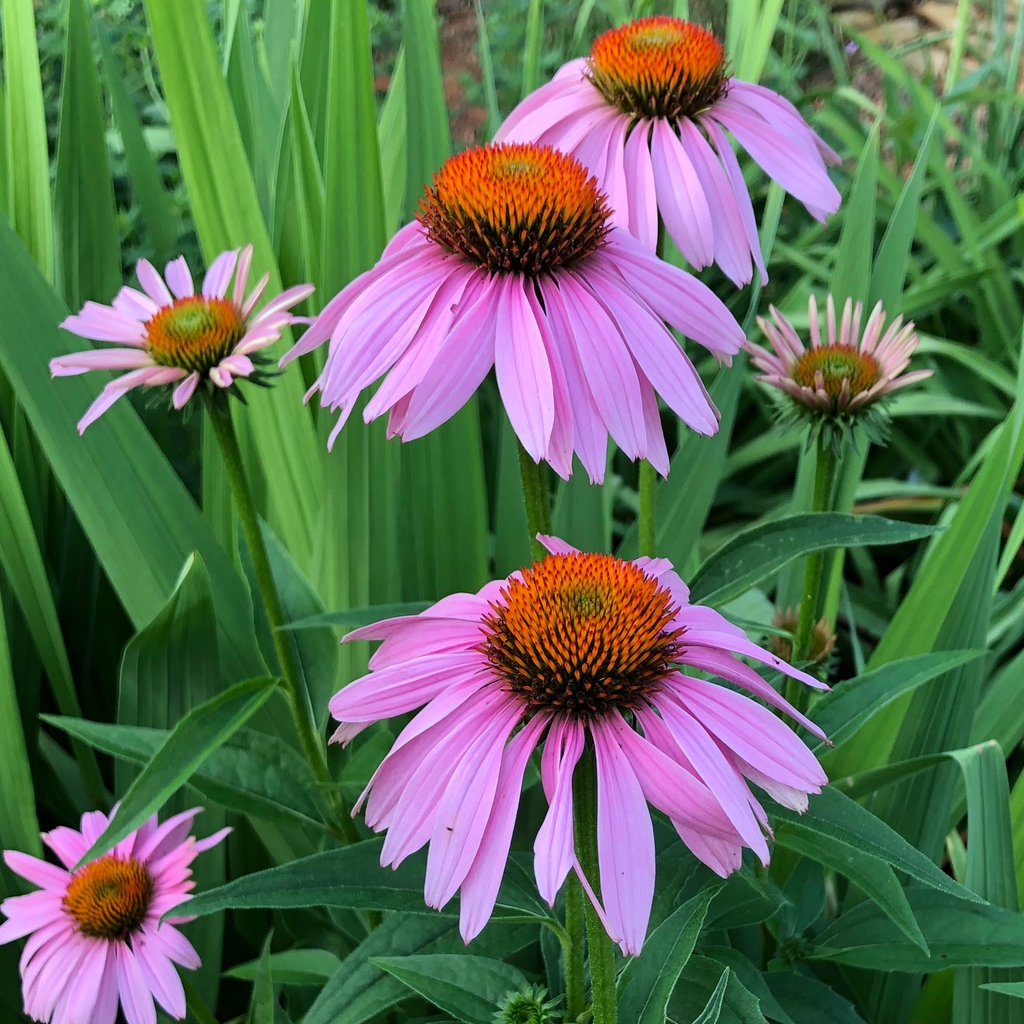
Peak bloom July through August. Seed heads persist into winter, feeding goldfinches and chickadees. Best suited to Piedmont and Mountain regions; verify suitability for your specific coastal plain site before planting.
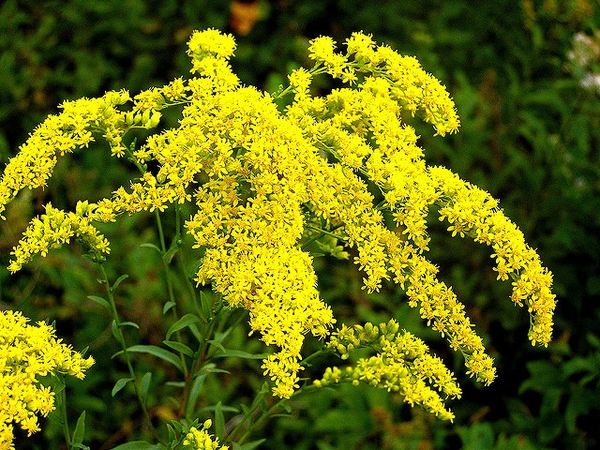
Goldenrod Is Not Optional
Goldenrod (Solidago spp.) gets blamed for hay fever that is actually caused by ragweed, which blooms at the same time with wind-dispersed pollen. Goldenrod's pollen is sticky and heavy. It travels by insect, not air. It cannot trigger hay fever in people who aren't handling it directly.
That misidentification has kept goldenrod out of yards where it would do significant ecological work. Dozens of native bee species are specialist goldenrod foragers. It also supports over 100 species of native moths and butterflies in the larval stage. In the Coastal Plain, Wrinkleleaf Goldenrod (Solidago rugosa) tolerates wet conditions and blooms August through October, feeding native bees during the critical late-season foraging period before dormancy.
After the flowers finish, leave the stems standing through winter. Ground-nesting and stem-nesting bees use the dried stalks as overwintering sites.
Bees Need More Than Flowers
About 70 percent of North Carolina's native bee species nest in the ground. They need bare or sparsely vegetated soil with good drainage. Dense mulch, heavy ground cover plantings, and synthetic turf all remove nesting habitat as effectively as removing flowers.
Stem-nesting bees use hollow or pithy plant stems. Leave last season's Wild Bergamot, goldenrod, and Joe-Pye Weed (Eutrochium spp.) stems standing until late spring. That wait is not laziness. It is bee habitat.
Late-season native asters (Symphyotrichum spp.) also belong in any bee planting. They are among the last major native flower sources before fall, and several specialist bee species depend on them for the protein stores needed to overwinter. A patch of Blue Wood Aster (Symphyotrichum cordifolium) or Elliott's Aster (Symphyotrichum elliottii) in the Coastal Plain extends the season well into October.