
By early July, most garden flowers are winding down. Native bees are working longer hours to provision their nests before the cold. Monarch butterflies are beginning to build up reserves for their southern migration. What your yard does in August, September, and October matters more for pollinators than most people realize — and right now, in June, is the time to plant for it.
A handful of NC native plants bloom through this fall gap. They are not hard to find or difficult to grow. Most are available at native plant sales and specialty nurseries across the state. Here is what to look for.
Goldenrod Is Not Your Problem
Goldenrod (Solidago spp.) gets blamed for late summer allergies every year. Blame ragweed instead. Ambrosia artemisiifolia blooms at the same time as goldenrod and spreads its pollen by wind. That is what is making you sneeze. Goldenrod is insect-pollinated, and its heavy pollen does not become airborne. It just happens to be visible and yellow at the same time ragweed is releasing invisible clouds of allergens into the air.
The actual story with goldenrod is that it is one of the most ecologically valuable plants in the eastern US. More than 100 species of native bees depend on it as a primary pollen source. Wrinkleleaf goldenrod (Solidago rugosa) handles wet coastal plain soils well, spreads to form a stable clump over time, and blooms from August into September with dense, arching sprays of bright yellow. Full sun to part shade.
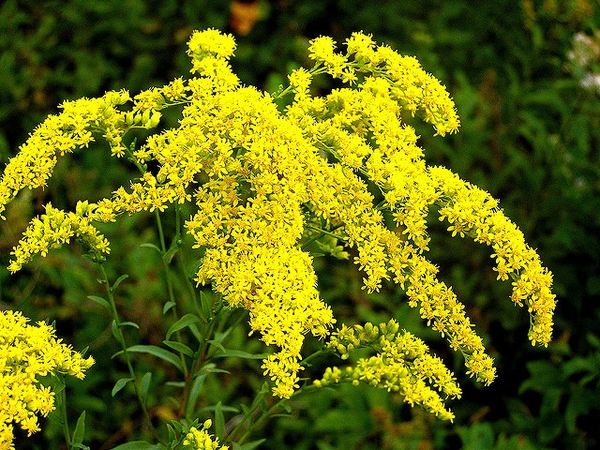
A sturdy fall bloomer for NC coastal plain gardens. Tolerates wet soils, spreads steadily, and draws over 100 native bee species. Blooms August through September. Full sun to part shade.
Native Asters Come Right Behind
Where goldenrod tails off in late September, native asters pick up. North Carolina has more than 20 native species in the genus Symphyotrichum, and they bloom from late summer through October. This is not a coincidence. Goldenrod and native asters evolved alongside the same community of late-season pollinators, and together they form the backbone of fall habitat across most of the eastern US.
New England aster (Symphyotrichum novae-angliae) is the tallest and showiest — 3 to 5 feet, purple or deep pink, and highly attractive to monarchs during their southward migration. It is the one most commonly stocked at nurseries. For sandy coastal plain soils, look for aromatic aster (S. oblongifolium): smaller, more compact, and better suited to dry conditions once established.
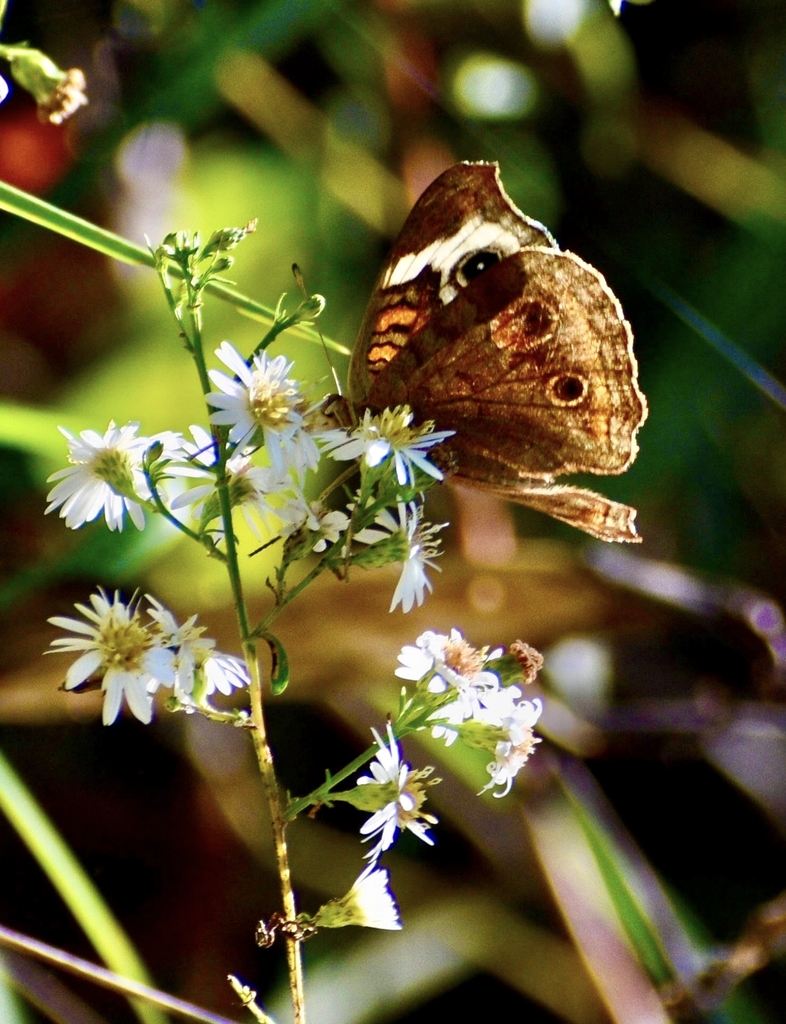
A key nectar source during monarch migration. Blooms September to October in shades of purple and deep pink. For coastal plain gardens with sandy soil, consider S. oblongifolium for better drought tolerance.
Three More Worth Adding
Each fills a different niche in the fall native garden.
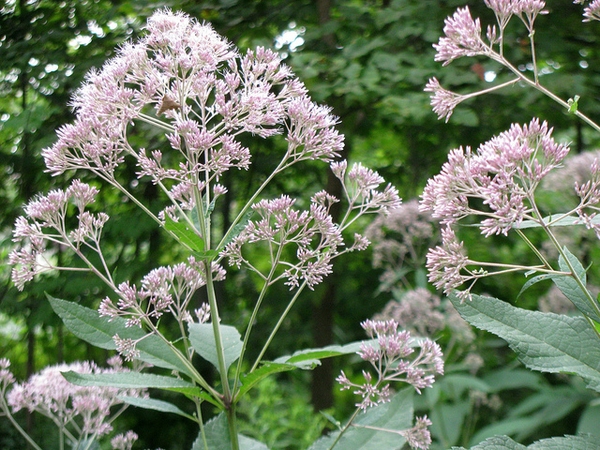
Grows 4 to 7 feet with clusters of dusty pink flowers from August into September. Strong draw for swallowtails and native bees. Prefers moist to average soil and full to part sun.
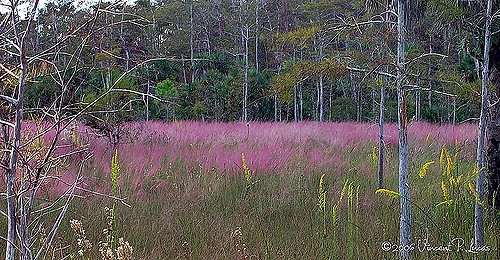
Native to NC's coastal plain. Airy pink plumes emerge in October and persist for weeks. Extremely drought and salt tolerant once established. Full sun. Works well in borders and mass plantings.
Brilliant purple-red flowers on 4 to 6 foot stems in August and September. One of the best late-season plants for bumblebees and large native bees. Prefers moist soil and full sun.
Why the Fall Window Matters
Most native bees are solitary. A single female digs her own nest, provisions each cell with pollen and nectar, and lays one egg per cell. She does this through summer and into fall, and she needs a reliable pollen source the whole time. When the garden goes quiet in August and there is nothing left in bloom, she has fewer resources to provision the nests that carry her species through winter.
Monarchs are in a different situation but just as dependent on fall flowers. The eastern population migrates through NC from late September through mid-October. Every nectar stop along that route matters. Native asters and goldenrod are two of the most reliable ones along the Atlantic flyway.
Most of the plants on this list are available at fall native plant sales hosted by botanical gardens, native plant societies, and conservation organizations across NC. A few nurseries carry them year-round. Planting in fall means the roots go in while the soil is still warm — often better establishment than spring planting for these particular species.