

An oak can support over 500 species of caterpillars. That is not a decoration statistic. It is the reason oak-covered landscapes feed songbirds, bats, and reptiles at every level of the food web. No native tree in eastern North America carries more ecological weight.
North Carolina has more than two dozen native oak species. Three of them are especially well suited to home landscapes and restoration plantings in the coastal plain and Piedmont.
Why Oaks Are Foundational
Entomologist Doug Tallamy's research on host plant relationships put oaks at the top of the list for supporting native caterpillar diversity. Caterpillars are the primary food source for most nesting birds, especially during the breeding season when parents are raising chicks. A yard without caterpillar-hosting trees cannot support nesting birds, regardless of how many nectar flowers you plant.
Oaks also produce acorns, which feed deer, turkey, squirrels, blue jays, and wood ducks. The leaf litter provides overwintering habitat for native bees and moth pupae. Rough bark supports lichens and invertebrates. Oaks give back at every stage of the year, and they do it for centuries.
Live Oak
The evergreen anchor of the NC coastal plain.
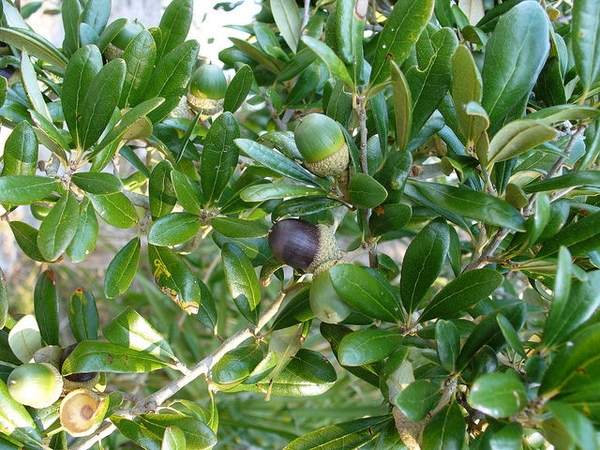
The defining tree of the NC coast. Stays green through winter, spreads wide rather than tall, and produces small acorns each fall. Tolerates salt spray, sandy soil, and wind better than almost any other large tree. Mature trees can exceed 60 feet wide.
Live Oak (Quercus virginiana) grows naturally from coastal Virginia south through Florida and along the Gulf Coast. In Wilmington and the surrounding coastal plain, it is everywhere. The broad, horizontal canopy is one of the most recognizable silhouettes in the region.
Because it is evergreen, Live Oak plays a different role than the deciduous oaks through winter. The foliage stays on through January and February, supporting caterpillar activity into the cold months and providing year-round cover for roosting and nesting birds. The bark on older trees develops deep furrows that shelter insects, bats, and small mammals.
Two More Oaks Worth Planting
Both of these species are NC natives that support dense caterpillar communities. They perform differently by site condition, so the choice depends on your soil and hydrology.
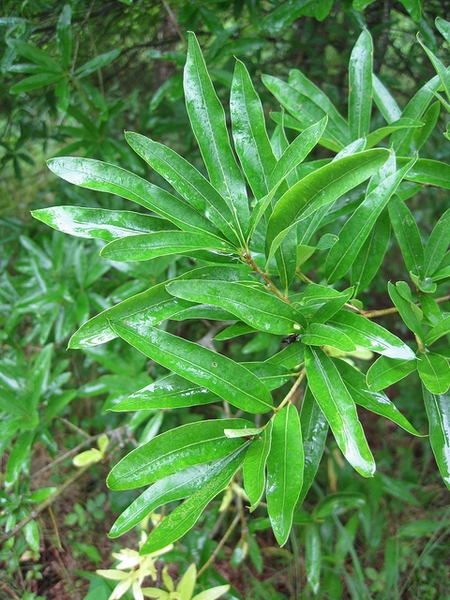
Narrow, willow-like leaves set this oak apart visually, but its ecological function is the same as any other oak. Native to NC stream banks and bottomlands, it tolerates wet conditions and compacted urban soils well. Common as a street tree across the coastal plain and Piedmont.
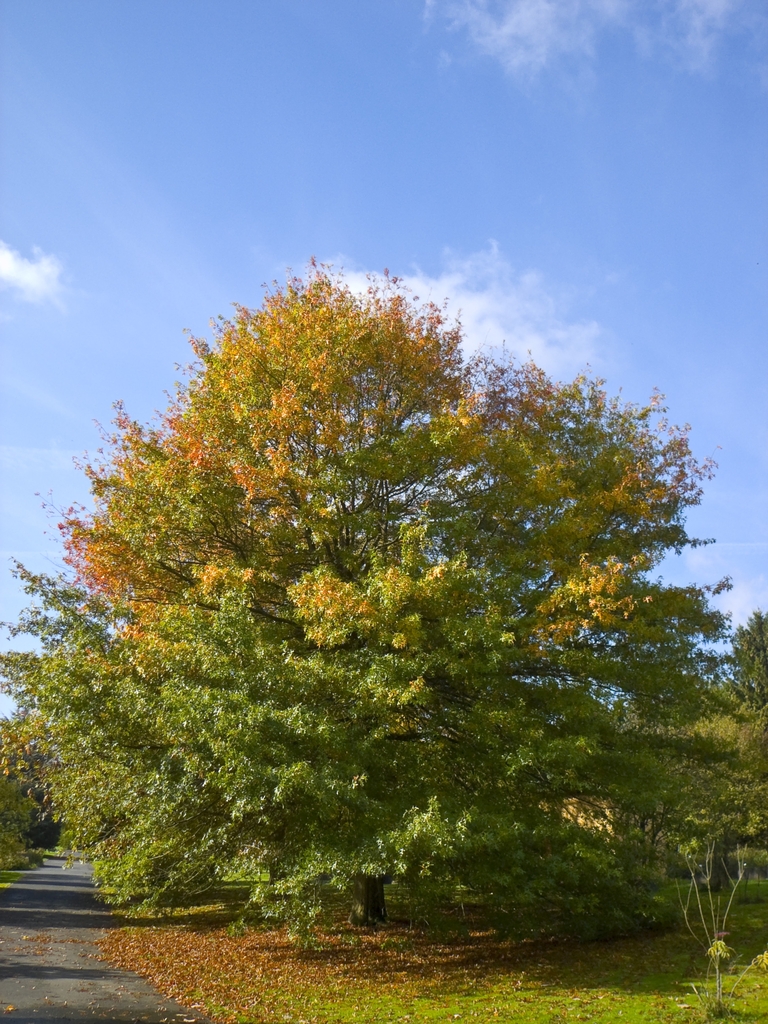
More common in the NC Piedmont than on the coastal plain, Pin Oak grows where soils are acidic and moist. Deeply lobed leaves and persistent, downswept lower branches make it easy to identify. Small acorns are a key food source for waterfowl.
What to Expect When Planting an Oak
Oaks invest heavily in root development before they push significant above-ground growth. A two-year-old seedling might look unimpressive in a one-gallon pot. Plant it in the ground and check back in three years. The root system is doing serious work underground before the canopy gets going.
Oaks in the red oak group, which includes both Pin Oak and Willow Oak, hold their leaves through much of the winter before dropping in early spring. This is called marcescence. The papery brown leaves clinging to the branches in January are not a disease symptom. It is a normal trait, and those retained leaves provide insulation and nesting material for overwintering wildlife.
If you have space for one large tree, an NC native oak is the highest-impact planting you can make for local wildlife. It will outlive you and feed wildlife for generations.