

When you hear "botany," it's easy to picture textbooks and Latin. But the real story of plant science is written in the forest around you. NC native plants do some genuinely remarkable things: they trap insects, flower on their trunks, fix nitrogen from thin air, and adapt to fire in ways that reshape entire ecosystems. Here are six species that show why plant biology is worth paying attention to.
Carnivorous Plants: Venus Flytrap
Dionaea muscipula — the only venus flytrap on Earth.

Endemic to the pocosins and savannas of southeastern NC, the Venus Flytrap is the world's most famous carnivorous plant. Its leaf traps snap shut in less than a tenth of a second when trigger hairs are stimulated, trapping insects and digesting them to supplement nutrients from nutrient-poor soils. This adaptation emerged because Venus Flytraps live in boggy, sandy areas where nitrogen is scarce.
The trap mechanism itself is a marvel of plant mechanics. When an insect touches the trigger hairs, an electrical signal races across the leaf. Water pressure inside the trap cells changes in milliseconds, and the leaf snaps shut with force. The plant then secretes enzymes to digest the prey—similar to how a venus flytrap functions as both a solar panel and a stomach.
Flowers That Grow on Tree Trunks: Eastern Redbud
Cercis canadensis — a spring bloom that appears straight from the wood.
One of the most distinctive botanical features in eastern NC forests is cauliflory: flowers that grow directly on the trunk and branches instead of at the branch tips. Cercis canadensis, the Eastern Redbud, does this beautifully. In early spring, magenta flowers emerge from the gray bark before the leaves unfold—a burst of color that seems to come from nowhere.
Why would a plant bloom on its trunk? Cauliflory makes sense in crowded forests. When trees are tightly packed and canopy light is limited, flowers on the trunk and lower branches are exposed to insects and sunlight that branch-tip flowers might miss. Eastern Redbuds use this strategy to capture pollinator attention at eye level, where they're more likely to be visited.
Ancient Fire-Adapted Trees: Longleaf Pine
Pinus palustris — a keystone species shaped by fire.
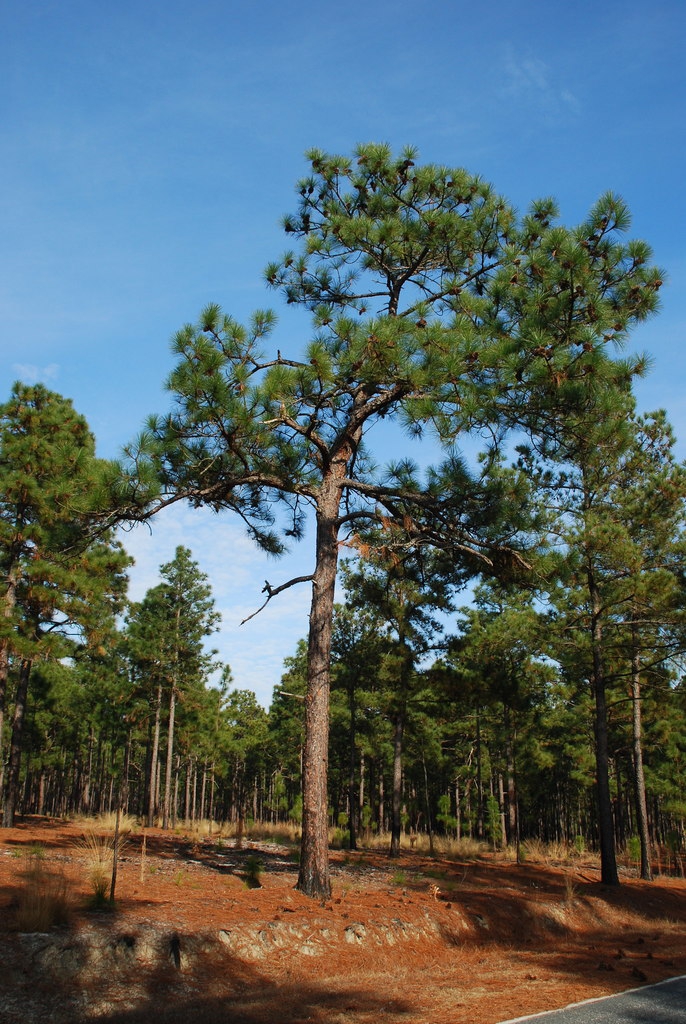
Once the dominant tree across 90 million acres of the southeastern US, longleaf has adapted to thrive in fire-prone ecosystems. Its thick bark resists burns, and its long needles drop slowly, allowing understory plants to persist between fires. The tree is now a conservation priority, and NC's remaining longleaf stands support some of the most diverse plant and animal communities on the coastal plain.
The relationship between longleaf and fire is fundamental to NC's native plant communities. For thousands of years, lightning and Indigenous burning shaped these forests. Longleaf's adaptations—deep root systems, heat-resistant bark, the ability to recover quickly after burns—are strategies that evolved in response to regular, low-intensity fire. When we suppress fire, longleaf forests decline, and the plant communities that depend on them disappear with them.
Nitrogen-Fixers and Understory Dynamics
Another set of botanical adaptations often overlooked but ecologically crucial: some native plants have partnerships with bacteria that allow them to convert atmospheric nitrogen into usable forms. These nitrogen-fixing plants enrich soil and support other species. Legumes like wild indigo and various clovers are nitrogen-fixers, as are members of the bayberry family like Myrica and Morella species native to NC.
In coastal plain soils where nitrogen is often limiting, these plants function as natural fertilizers. They're early colonizers in disturbed areas and understory contributors to forest nitrogen cycling. Understanding which of your native plants do this work gives you insight into how to design gardens that support soil health and other plants without adding synthetic inputs.
Understory Fruit Producers: Pawpaw
Asimina triloba — tropical fruit from a temperate tree.
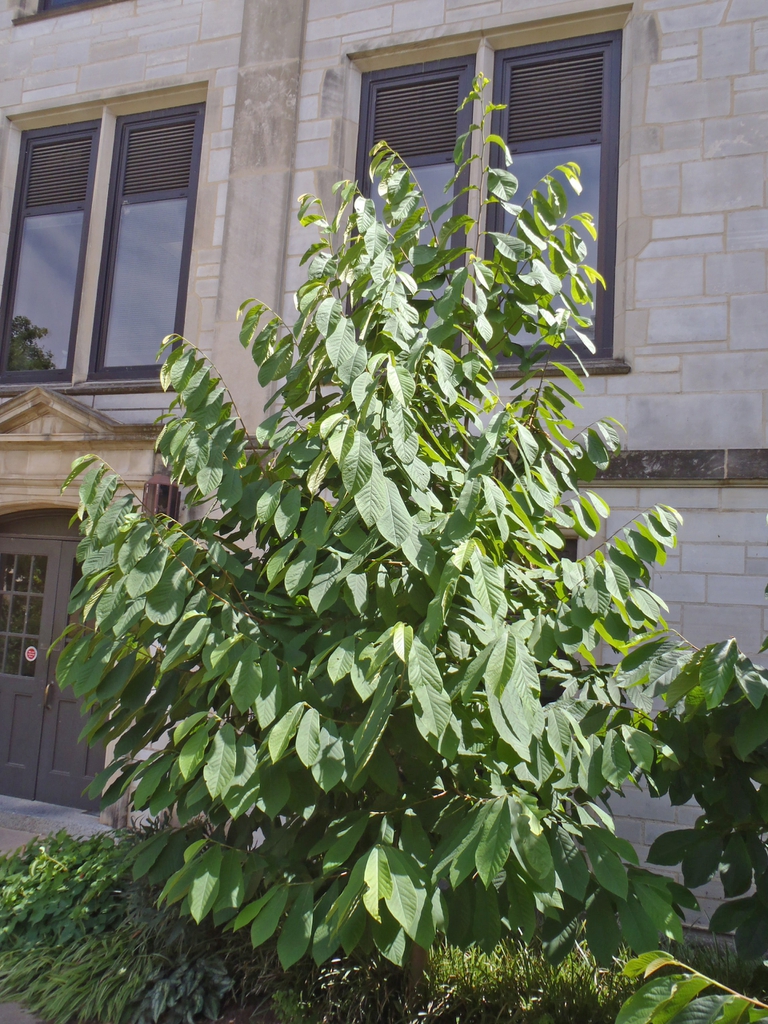
NC's native pawpaw produces the largest fruit of any temperate North American tree: a tropical-tasting custard-like fruit that ripens in fall. The tree grows as an understory shrub or small tree in moist woodlands and along streams, and its fruits attract wildlife and people alike.
Pawpaw's fruit is botanically curious. Its texture and flavor—creamy, aromatic, faintly tropical—hint at the tree's evolutionary relatives in the tropical Annonaceae family. Yet pawpaw grows comfortably in NC's seasonal climate. The fruit is also a host plant for the zebra swallowtail butterfly, making it an ecologically important food source and a draw for pollinators.
Coastal Plain Specialization: Yaupon Holly
Ilex vomitoria — the only native North American caffeine source.
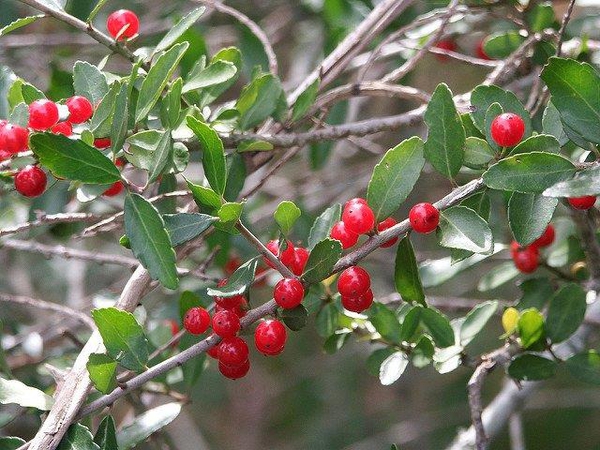
Restricted to the coastal plain from eastern NC south to Texas, yaupon produces bright red berries and caffeine-rich leaves. Indigenous peoples brewed yaupon for centuries as a stimulating beverage. Its salt tolerance and evergreen foliage make it perfectly adapted to maritime and coastal environments.
Yaupon's caffeine production is itself a botanical adaptation. Caffeine acts as a natural pesticide and an antimicrobial compound—a defense against insects and pathogens. The tree produces caffeine in its leaves the same way coffee and tea plants do elsewhere in the world. Understanding this adaptation reminds us that many plants we think of as tropical—like caffeine-producing species—have close native relatives here in NC that share similar chemistry.
Why Plant Adaptations Matter
These botanical features—carnivory, cauliflory, fire adaptation, nitrogen fixation, unusual fruits, and specialized chemistry—aren't just interesting facts. They're the story of how plants solve problems, compete for resources, and shape entire ecosystems. When you plant a native species in your garden or forest, you're supporting these adaptations and the wildlife that depends on them.
The deeper you understand how native plants work, the better you can choose species that will thrive in your space and support the wildlife around you. And the more you look at the plants in NC's forests and wetlands, the more you'll notice: botany isn't abstract. It's everywhere.