

This page is for wholesale buyers. It covers the full current product line, the new 2 x 3.5 inch backing card design, and what the collection looks like on a shelf. If you have questions or want to place an order, reach out directly at theplantecologist@gmail.com.
Every product is made by a plant ecologist based in Wilmington, NC. The illustrations are scientifically accurate. The species are regionally grounded. That is the point, and it is what makes these move in museum gift shops, botanical garden stores, and nature center retail settings.
The New Packaging
Each card is now 2 x 3.5 inches with a species photo and ecological fact on the back
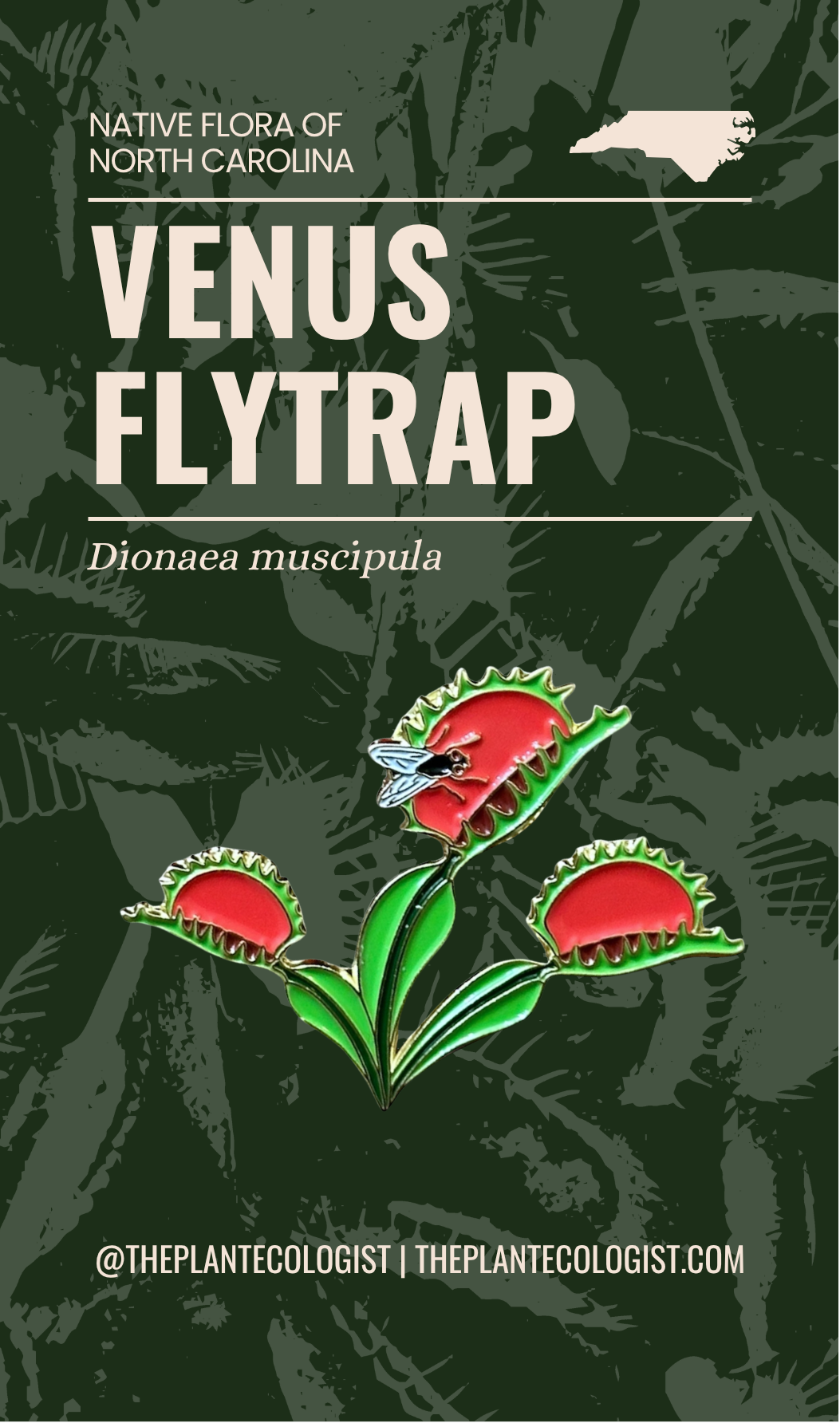
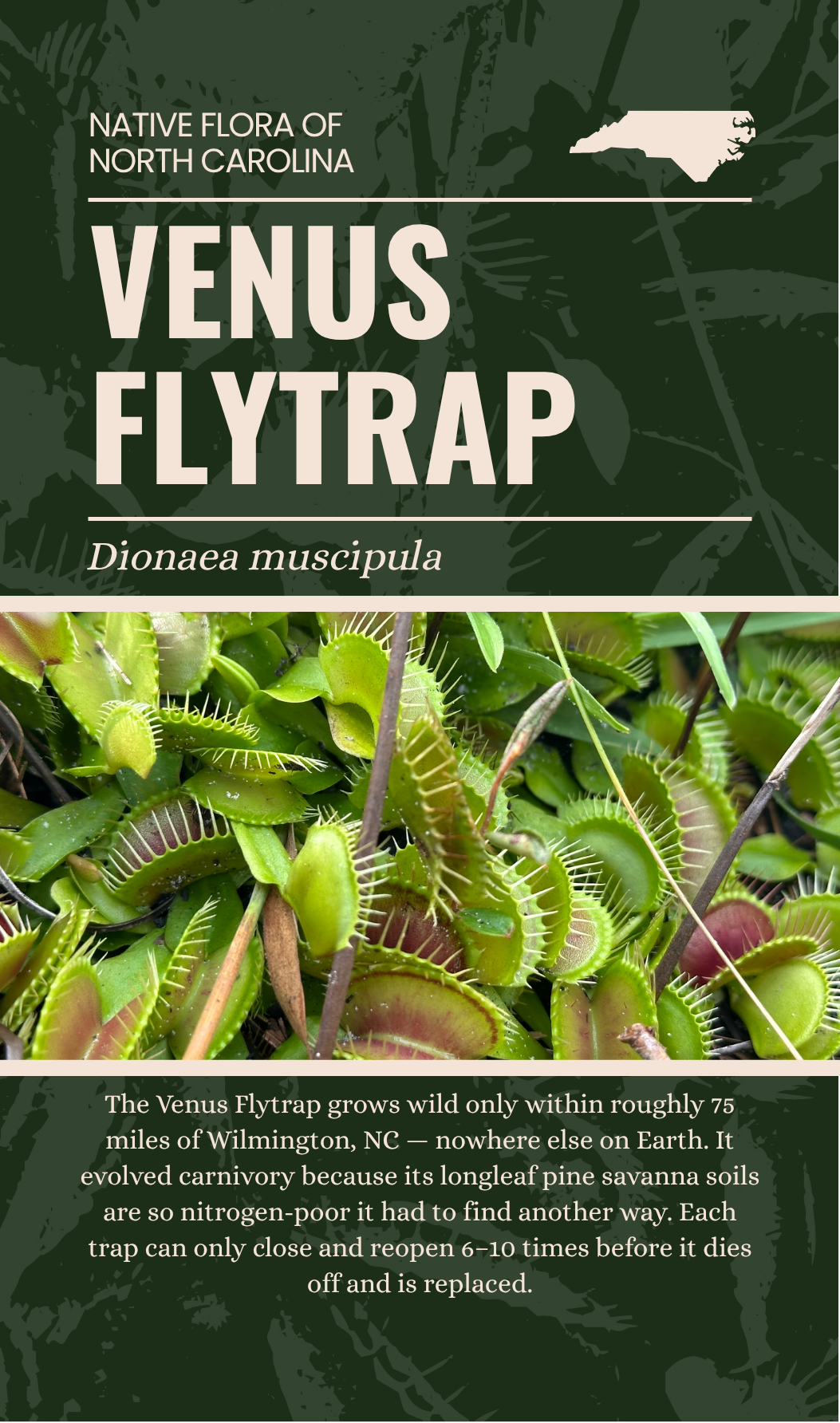
The previous packaging was a standard hang tag. The new cards are printed on both sides. The front shows the pin or keychain on a branded background. The back carries a real field photograph of the species and one ecological fact, chosen because it is specific and not obvious.
The Venus Flytrap card notes that each trap can only open and close 6 to 10 times before dying and being replaced. The Beautyberry card explains that the leaves contain a compound nearly as effective as DEET against mosquitoes, which rural Southerners used under horse harnesses for over a century before the science confirmed it. The Monarch card covers the single "super generation" that navigates 3,000 miles back to Mexico without having made the trip before.
Customers read the back. That is what drives the repeat conversation at the register and the social media posts from buyers who keep the card. The packaging is part of the product.
NC Native Plants Pin
Five species, four physiographic provinces, one state — the best-selling pin in the collection
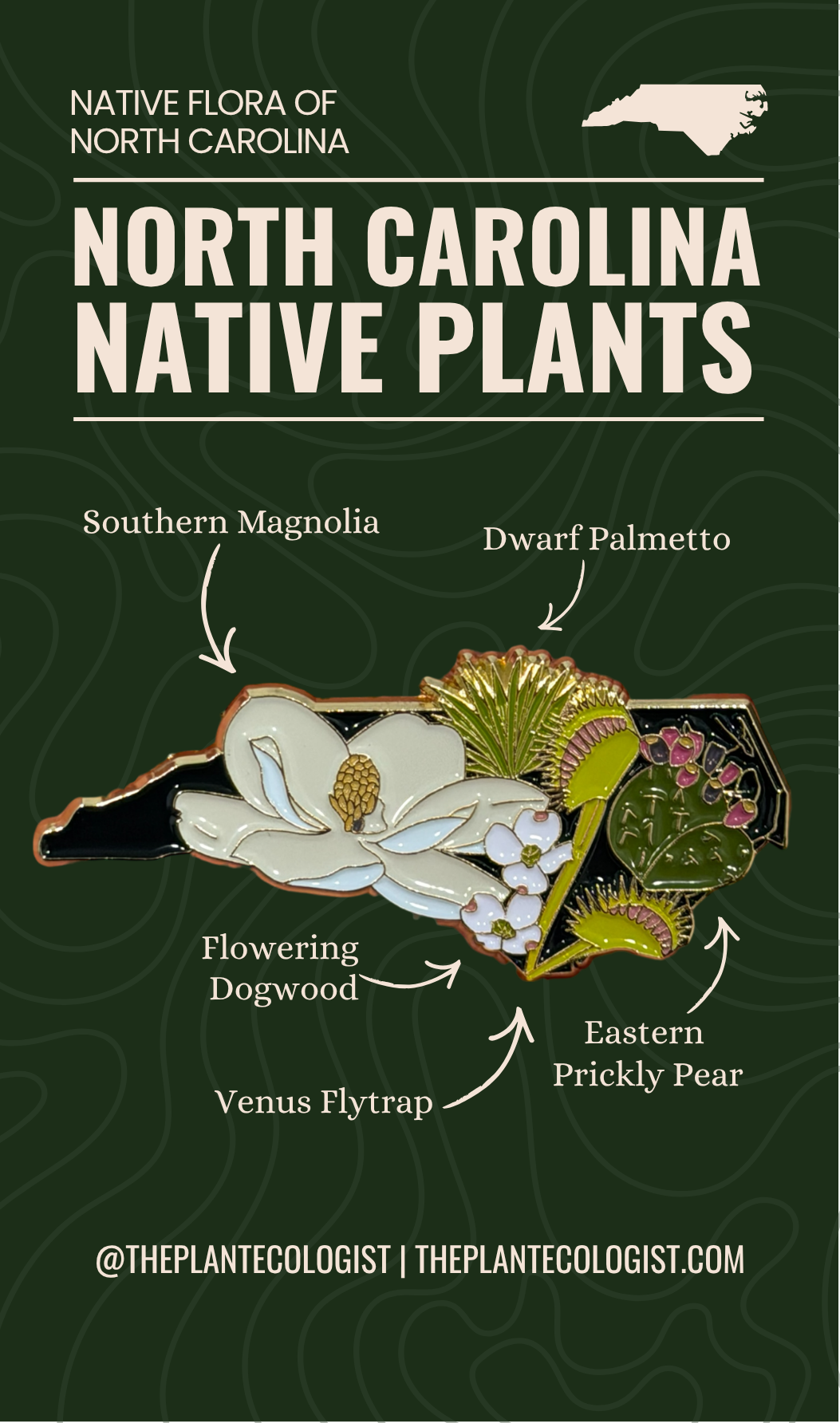
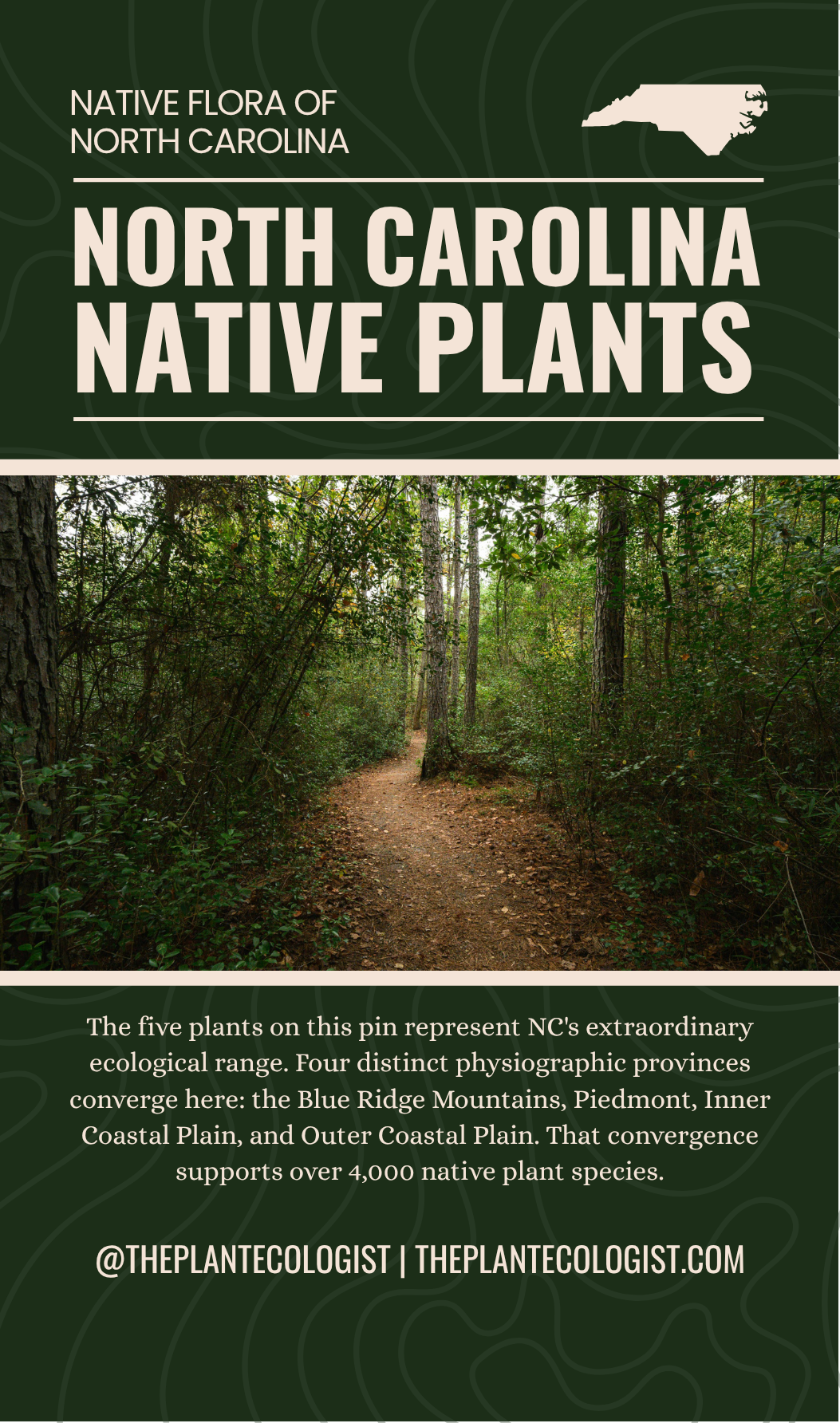
The design maps five native species onto the shape of the state: Southern Magnolia, Dwarf Palmetto, Flowering Dogwood, Venus Flytrap, and Eastern Prickly Pear. Each represents a different physiographic region. The card back notes that NC's convergence of four distinct provinces supports over 4,000 native plant species.
This is the top-selling pin in the shop and the one that shows up in every wholesale order. It performs across every retail context we are in, from coastal gift shops to inland botanical gardens to university nature centers. Customers from different parts of NC recognize different plants in it, which gives staff something to talk about at the register.
Venus Flytrap Pin and Keychain
Dionaea muscipula — endemic to within 75 miles of Wilmington, the strongest regional story in the collection
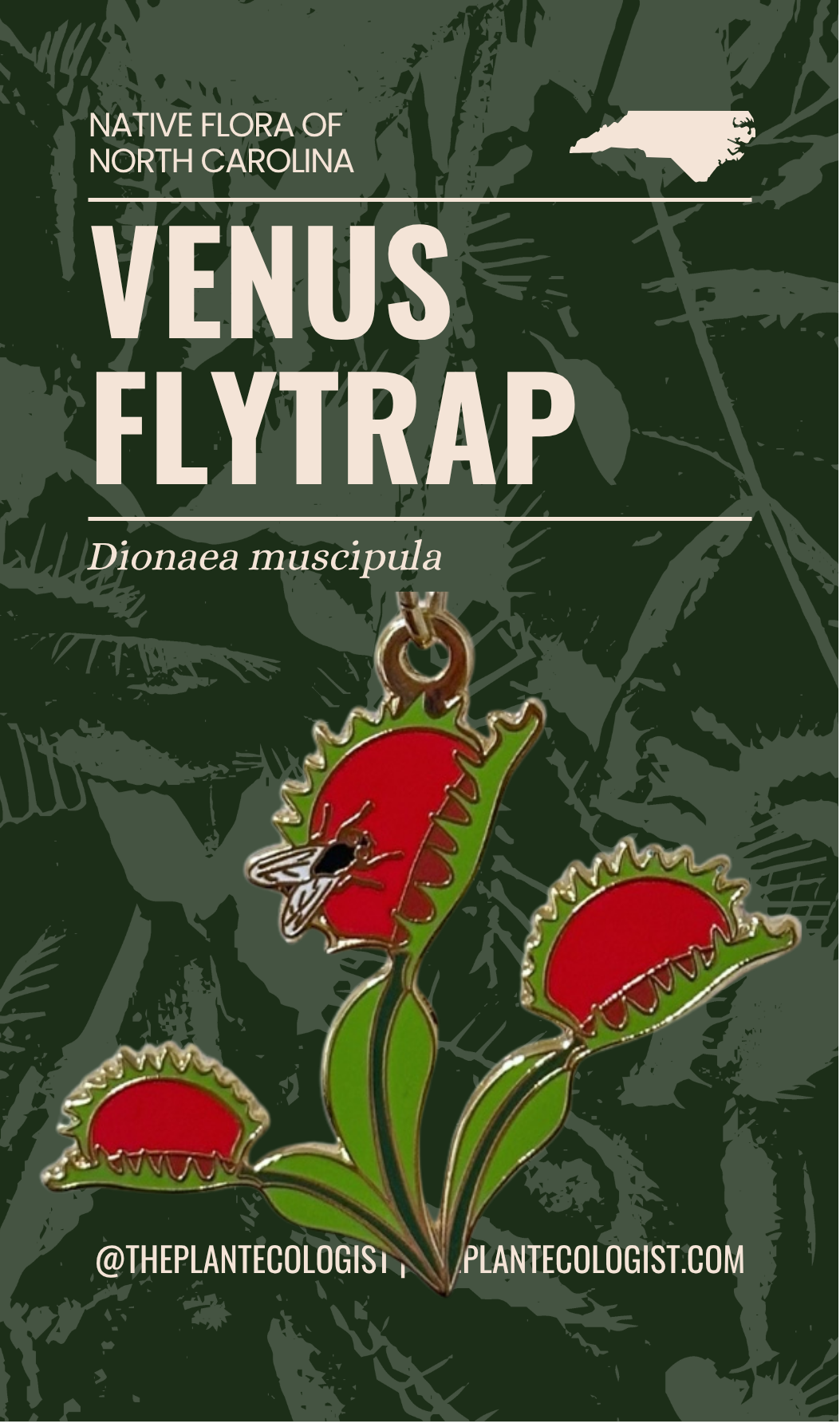
The Venus Flytrap grows natively on Earth in exactly one place: within roughly 75 miles of Wilmington, NC. No other state, no other country. Its existence depends on the wet, nitrogen-poor soils of longleaf pine savannas specific to this coastal plain. That is the story on the card back, and buyers at coastal and regional shops respond to it immediately.
The pin shows the trap with red interior coloration, which is what a healthy sun-grown plant looks like. Both the pin and the 2-inch keychain use the same illustration. The keychain comes on its own card with the same packaging treatment.
These are the fastest-moving items in the collection at nature centers and botanical gardens within the coastal plain. The regional specificity is the selling point.
Maypop Passionflower Pin
Passiflora incarnata — the most widespread native passionflower in the eastern US, new to the collection
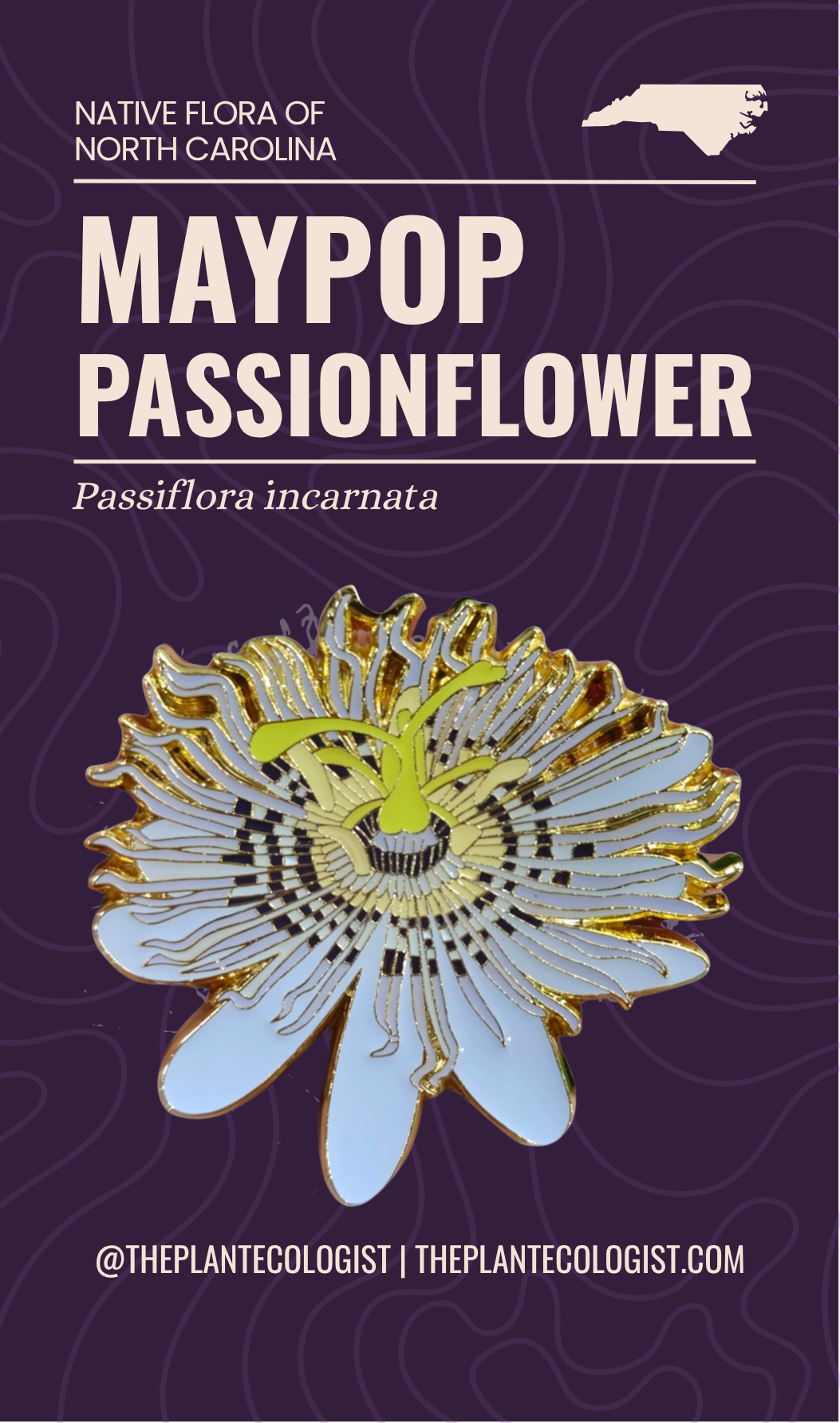
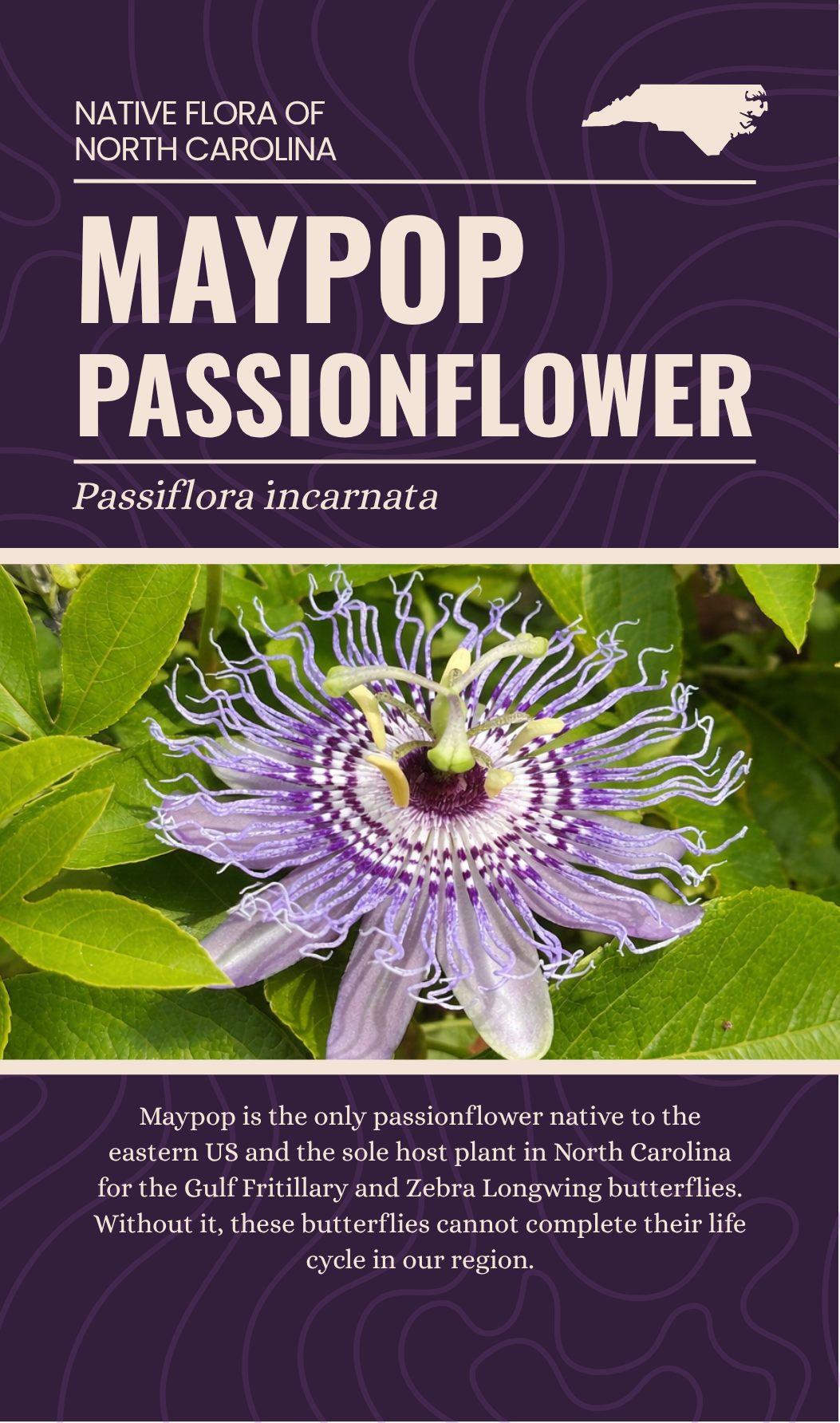
This is the newest design. Maypop (Passiflora incarnata) is the most widespread passionflower native to the eastern US and a documented host plant in NC for the Gulf Fritillary butterfly. Gulf Fritillary caterpillars cannot complete their life cycle without Passiflora, and Maypop is the species they have access to across most of this region.
The flower is visually unlike anything else in the southeastern native plant catalog: the radiating corona filaments, the elevated stigma structure, the pale lavender petals. The illustration captures the real morphology rather than simplifying it. Customers who grow Maypop or who have seen it in the field recognize it immediately.
Strong fit for native plant nurseries, botanical gardens, and nature centers running butterfly habitat programming. The host plant connection gives staff an easy talking point.
Monarch Butterfly and Milkweed Pin
Danaus plexippus with Asclepias spp. — broad audience, strong in spring and fall
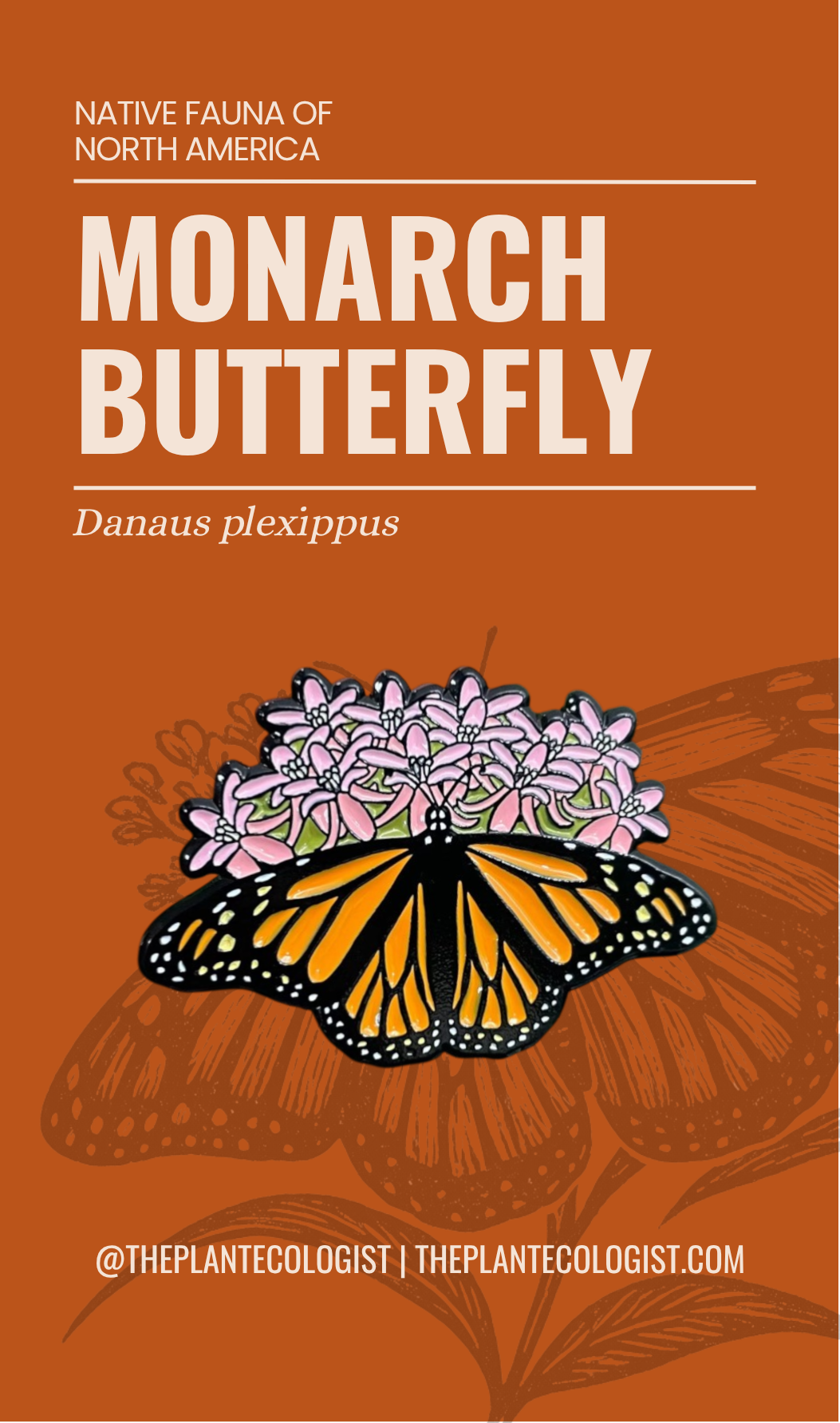
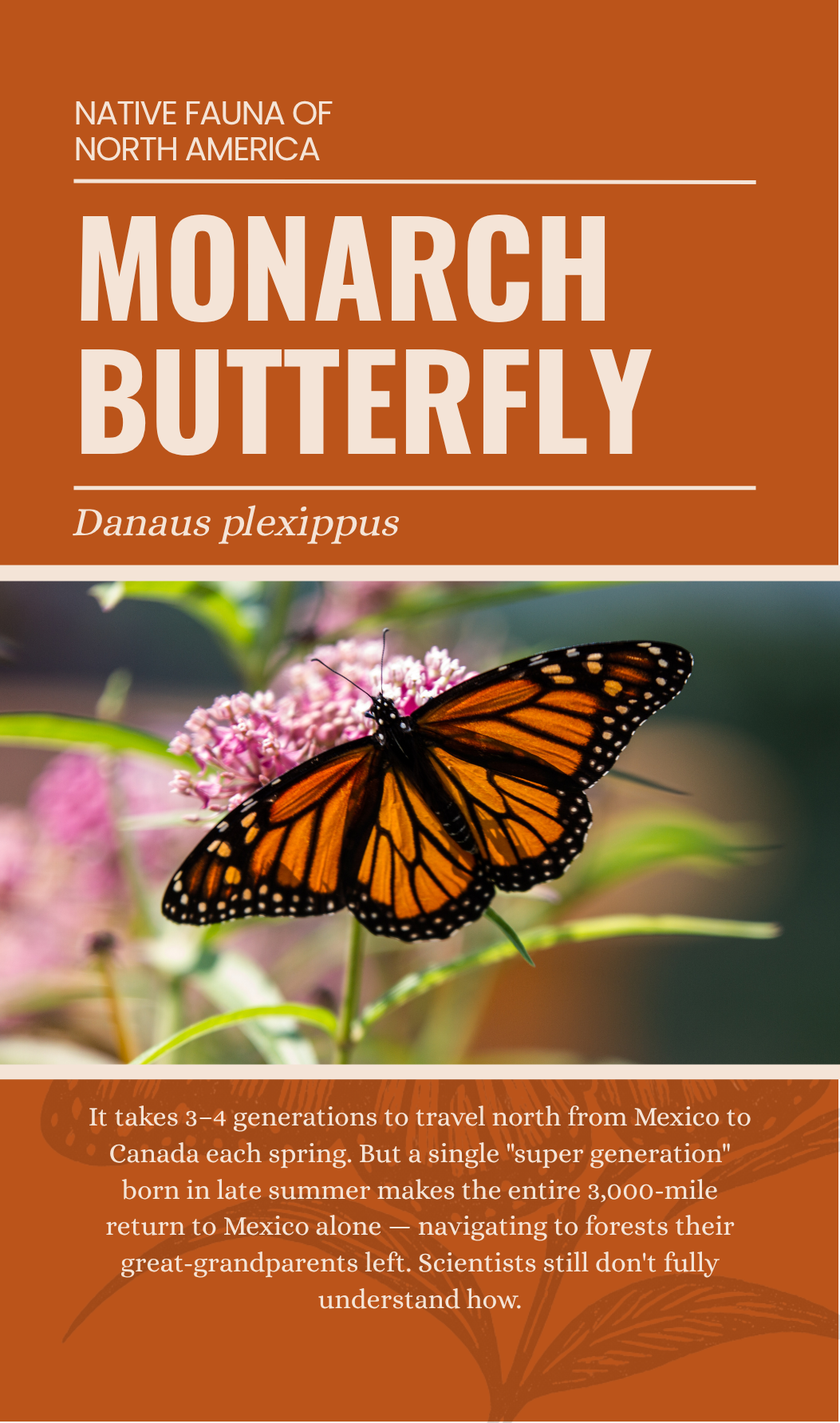
The Monarch is one of the most recognized species in conservation education and one of the easiest sells in any nature retail setting. The pin shows a Monarch on milkweed, which is the obligate larval host plant. No milkweed, no caterpillars, no migration. That relationship is what the illustration depicts.
The card back covers the "super generation" that navigates 3,000 miles to Mexico alone, to forests it has never been to. It is the detail that makes people stop and re-read the card, which is exactly the kind of moment that drives a purchase.
This design has broad appeal beyond regional buyers. Works in any nature, science, or gift retail setting nationally. Strong in spring and fall alongside migration content.
Frog and American Beautyberry Pin
Callicarpa americana with native tree frog — fall peak, strong in Southeast
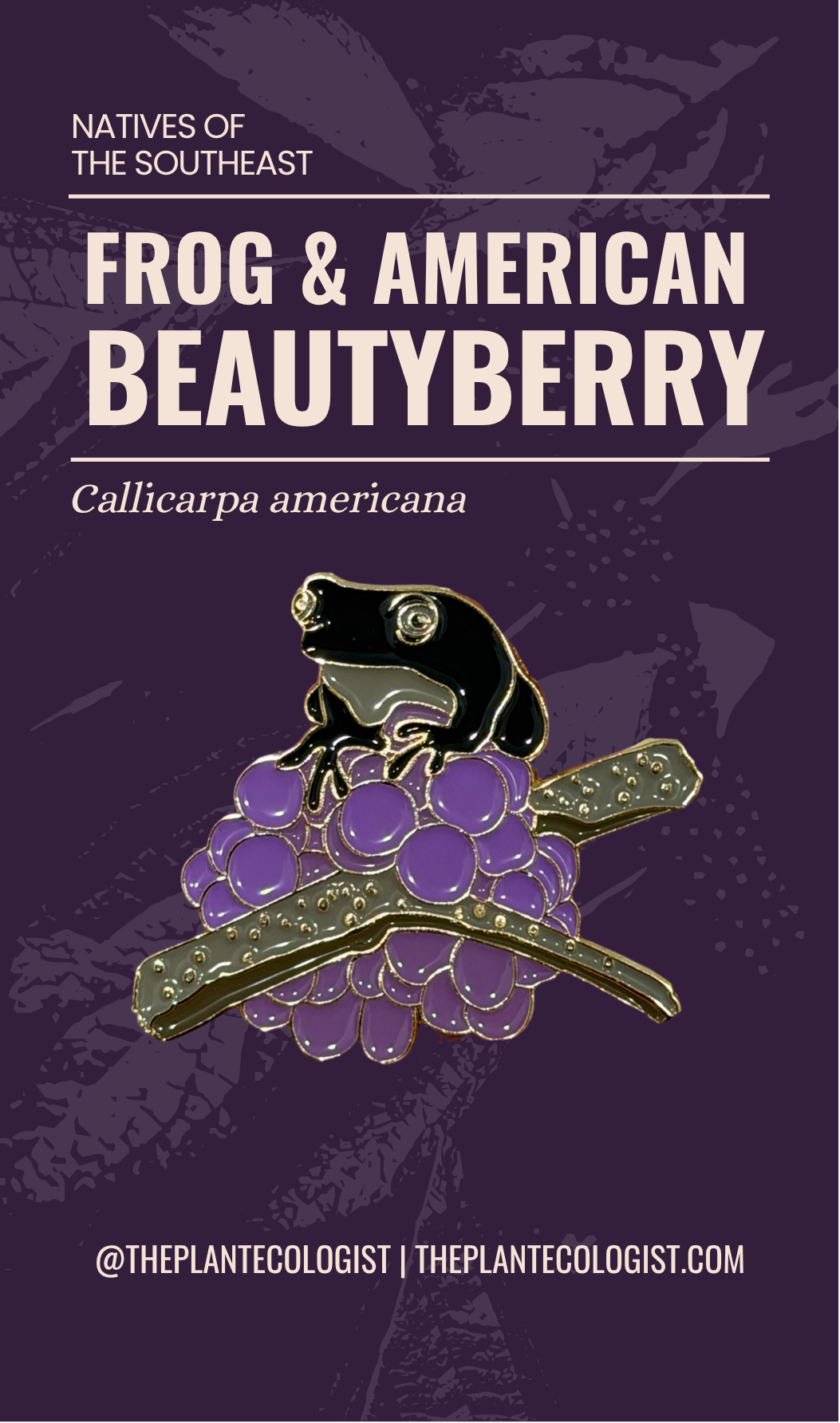
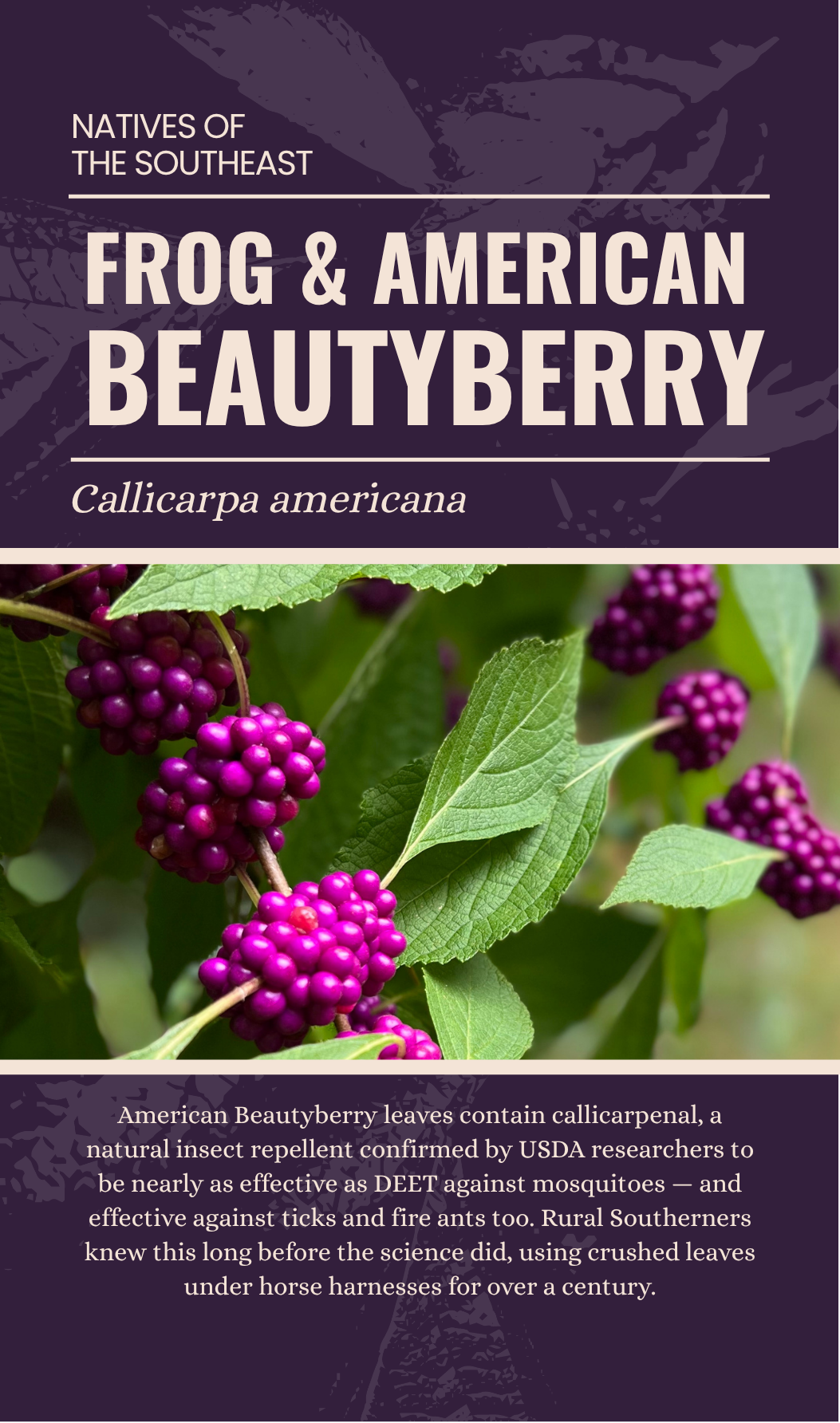
American Beautyberry (Callicarpa americana) is one of the most visually distinctive native shrubs in the Southeast. The berries are an almost fluorescent magenta-purple, clustered tight against the stems in late summer and fall. Anyone who has seen this plant in a Carolina wood line knows it immediately.
The card back is the one that gets the most reaction: the leaves contain a compound confirmed by USDA researchers to be nearly as effective as DEET against mosquitoes, ticks, and fire ants. Rural Southerners used crushed leaves under horse harnesses for over a century before the science caught up. The pin pairs the plant with a native tree frog that shares its forest-edge habitat.
Best in fall rotations. Strong fit for Southeast-focused nature retail and native plant nurseries. The mosquito-repellent fact is a consistent conversation starter.
Eastern Five-Lined Skink Pin
Plestiodon fasciatus — the lizard everyone has seen and nobody can name
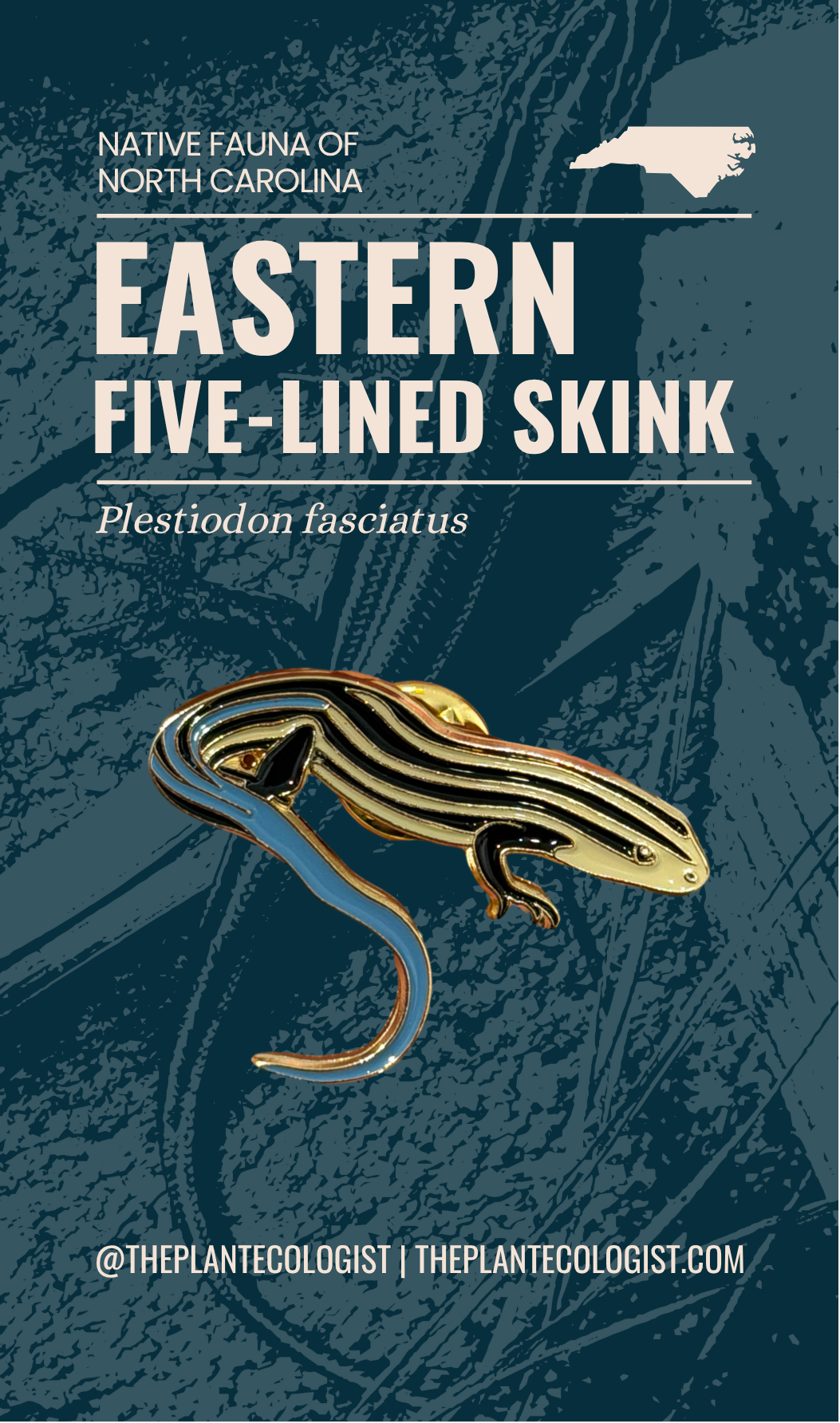
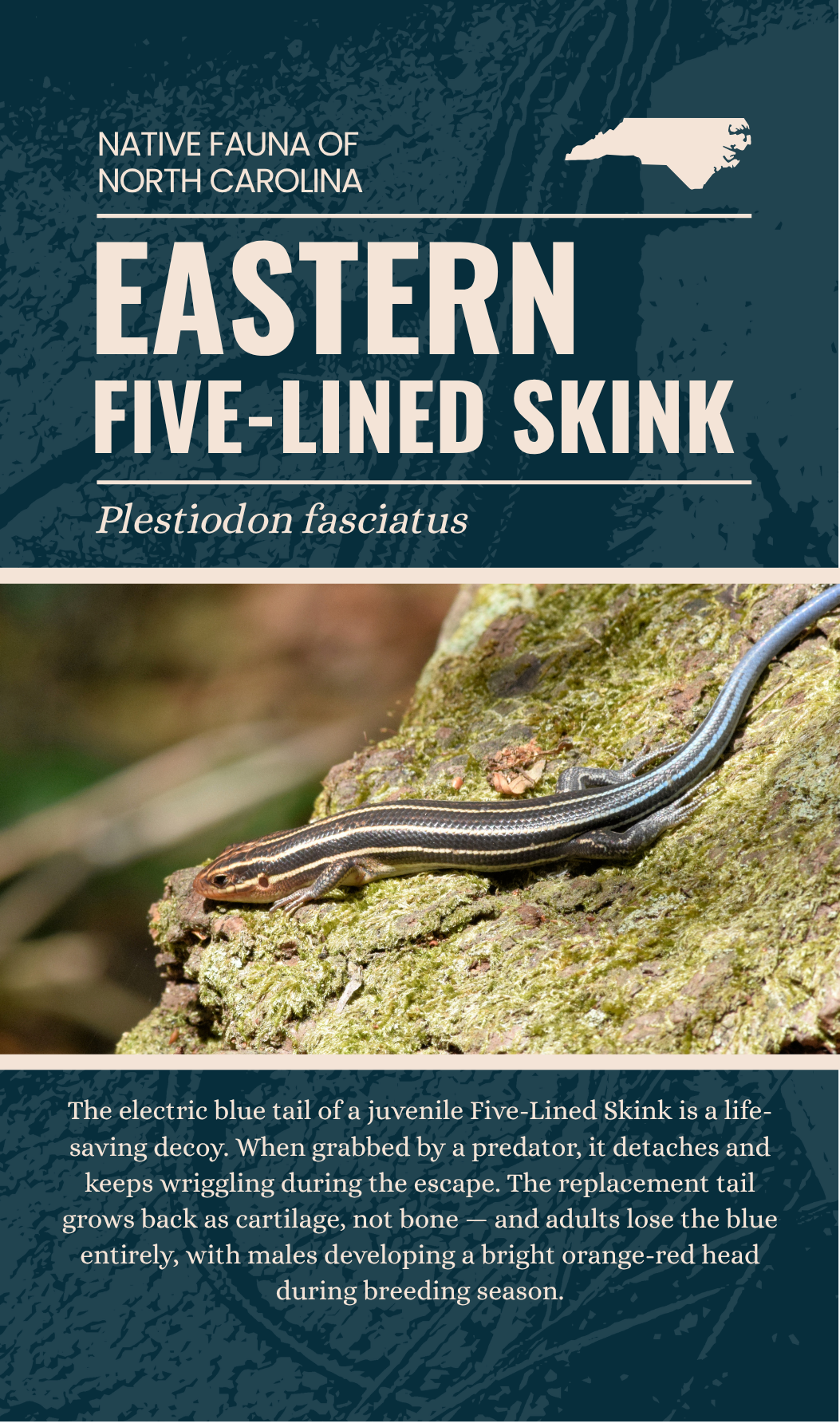
The Eastern Five-Lined Skink is the most common lizard in North Carolina and possibly the most frequently misidentified. The card back explains the blue tail: it is specifically designed to detach and keep moving when grabbed by a predator, while the skink escapes. The replacement tail grows back as cartilage, not bone. Adults lose the blue coloration; males develop an orange-red head during breeding season.
People who have spent time outdoors in NC have seen this animal and asked what it was. The pin gives them the answer and the story. It is one of the more detailed pieces in the collection for linework, and it performs well at natural history museums and nature centers where visitors come in specifically looking for the wildlife they observed on a trail.
Green Sea Turtle Keychain
Chelonia mydas — top seller at coastal shops, nests on NC beaches May through August
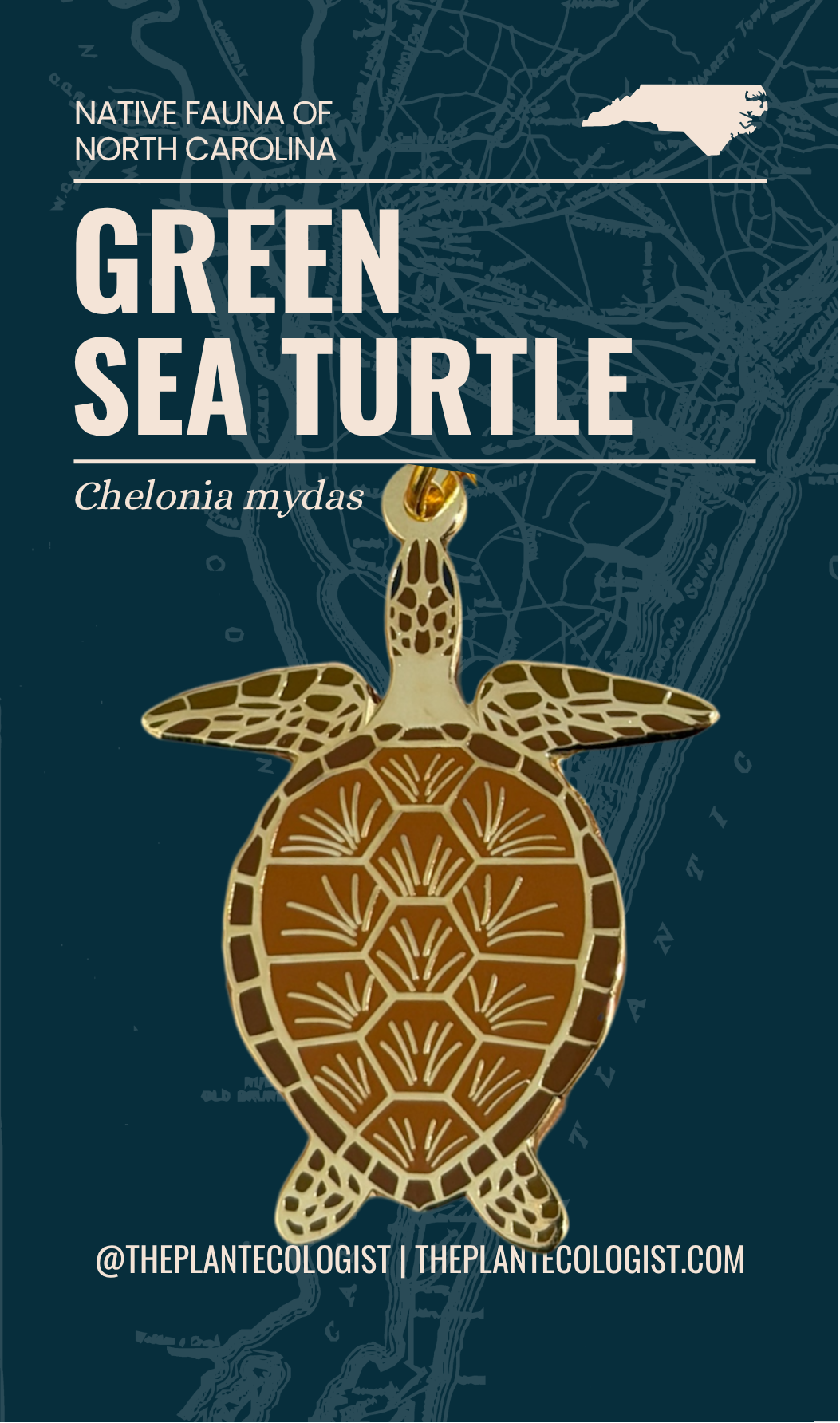
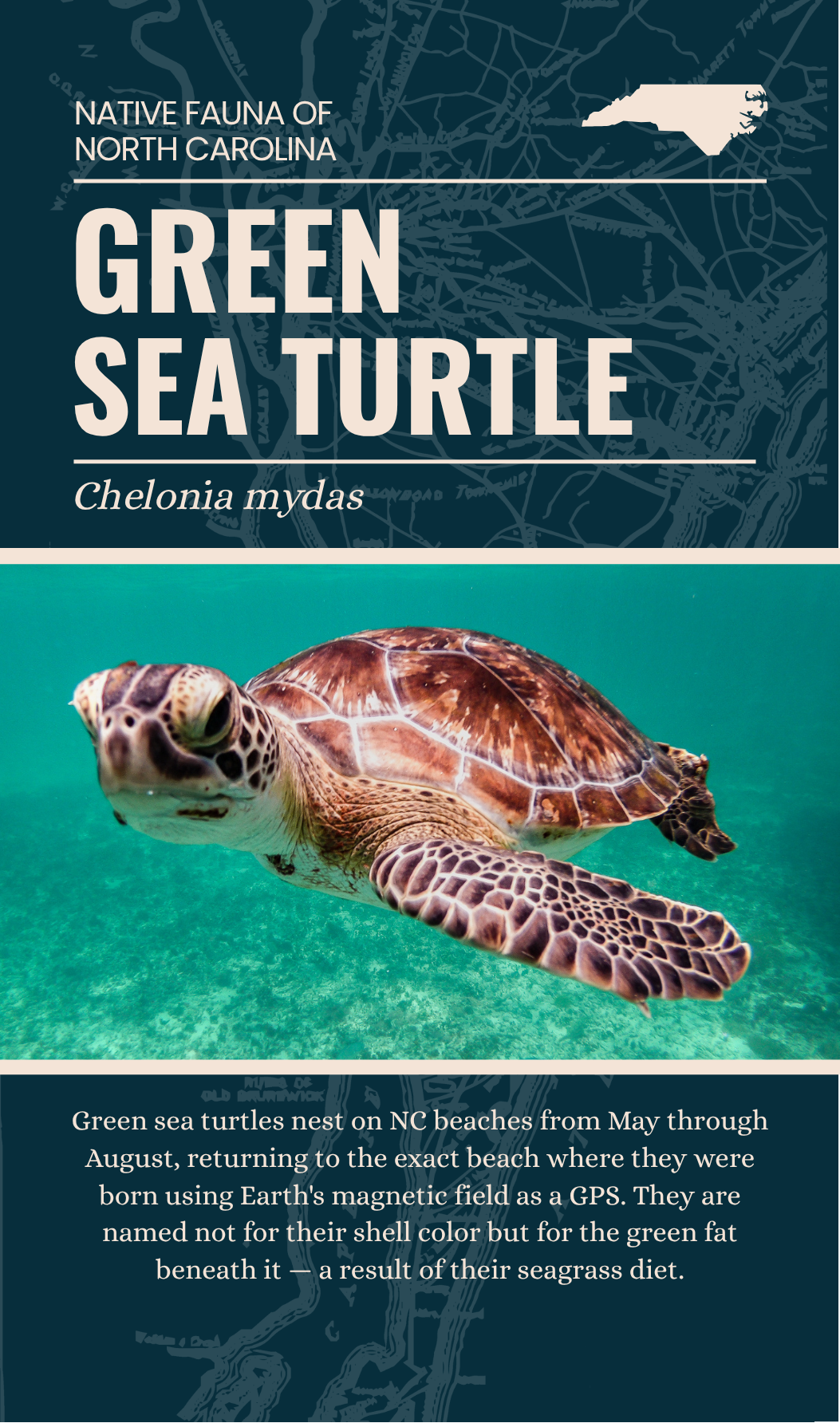
Green Sea Turtles nest on NC beaches from May through August and return to the exact beach where they hatched, navigating using Earth's magnetic field. They are named not for their shell color but for the greenish fat beneath it, which comes from their seagrass diet. The card back covers all of this in four sentences.
This is a 2-inch keychain, the same illustration style and packaging treatment as the pins. It is the fastest-moving item in the collection at coastal gift shops and has been since we launched it. On the Outer Banks and at any shop within nesting range of the NC coast, this is a reliable add-on sale and a consistent restocking item.
Wholesale Terms
Email to place an order
All pins and keychains are $7.20 wholesale. Stickers are $1.50 each. Minimum order is $100. We ship from Wilmington, NC.
We currently stock wholesale accounts at botanical gardens, natural history museums, nature centers, native plant nurseries, and coastal gift shops across NC and the Southeast. The product line is built specifically for the kind of retail environment where customers are already interested in regional ecology. It does not require staff to explain why the science matters. The packaging does that.
To place an order, email theplantecologist@gmail.com.
Full Product Line
-
NC Native Plants Enamel Pin
Five-species state design — $12.50 retail, top seller across all wholesale accounts -
NC Native Plants Sticker
Matching die-cut sticker — from $3.00 retail -
Venus Flytrap Enamel Pin
Dionaea muscipula — $12.00 retail, endemic to NC coastal plain -
Venus Flytrap Keychain
Same illustration, 2 inches — $12.00 retail -
Maypop Passionflower Pin
Passiflora incarnata — $12.00 retail, new design -
Maypop Passionflower Keychain
1.75-inch keychain — $12.00 retail -
Monarch Butterfly & Milkweed Pin
Danaus plexippus with Asclepias spp. — $12.00 retail -
Frog & American Beautyberry Pin
Callicarpa americana — $12.00 retail, strong in fall -
Eastern Five-Lined Skink Pin
Plestiodon fasciatus — $12.00 retail -
Green Sea Turtle Keychain
Chelonia mydas — $12.00 retail, top seller at coastal shops