

A follower sent me a photo this week of a caterpillar the size of a hot dog, pale green, studded with black-tipped red horns, sitting on a persimmon tree in her yard. Her first question was whether to kill it. The answer is no. That is a hickory horned devil, the larva of the regal moth, and it is one of the most harmless, most misunderstood insects in North Carolina.
Meet the Regal Moth
The regal moth (Citheronia regalis), sometimes called the royal walnut moth, is one of the largest moths in North America. Its caterpillar, the hickory horned devil, can grow to nearly 5.5 inches long in its final instar (University of Florida EDIS). Despite the size and the intimidating horns, the caterpillar cannot sting or bite. The horns are soft and the whole animal is safe to handle.
Adult regal moths do not eat at all. They have no functional mouthparts, so every bit of energy they will ever have as an adult was stored during the caterpillar stage (University of Florida EDIS). That means the tree the caterpillar feeds on is not incidental. It is the only resource this insect gets in its entire life. When the caterpillar is ready to pupate, it does something else unusual for a moth: it burrows into the soil and forms an earthen chamber instead of spinning a cocoon (NC State Extension). In North Carolina, this species usually completes one generation per year.
The Trees That Make This Possible
What a hickory horned devil actually eats
Hickory horned devils feed on a specific group of native hardwoods: sweetgum, persimmon, hickory, black walnut, and sumac, with ash recorded as an occasional host (NC State Extension). If none of these trees are in the landscape, the caterpillar has nowhere to go. This is the same story behind most of NC's showiest moths: the adult gets the attention, but the tree in the ground is what actually keeps the population going.
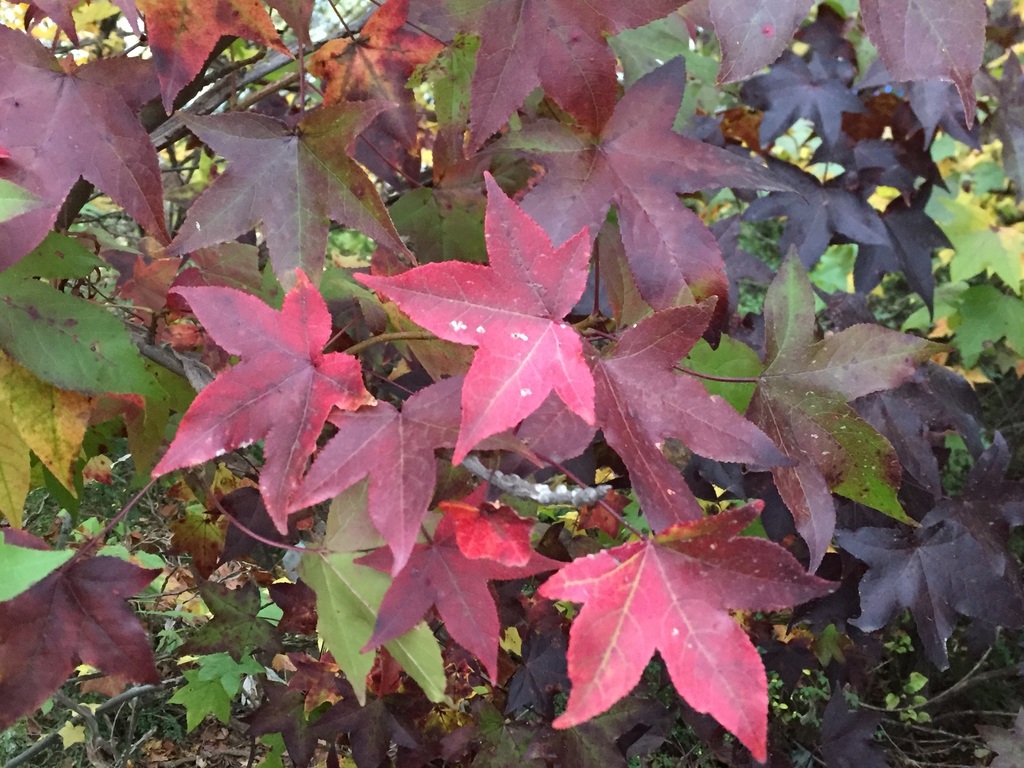
A large deciduous tree common across the NC coastal plain and Piedmont. One of the most reliable host trees for the hickory horned devil and several other large moth species. Gets removed often for its spiky seed balls, at real ecological cost.
A slow-growing native tree with fruit that ripens after frost. A confirmed host for the hickory horned devil, and the exact tree the caterpillar I was sent a photo of this week was found on.
One of several native hickories in NC forests and the tree that gives the hickory horned devil its name. Nuts feed squirrels and other wildlife well past caterpillar season.
A large native tree in the same family as hickory. Another confirmed host, and part of the reason this moth is also called the royal walnut moth.
A smaller native shrub or small tree, often overlooked, that rounds out the hickory horned devil's host list. Tolerates poor, dry soil and colors bright red in fall.
If You Find One
Leave it where it is. A hickory horned devil found in late summer is close to finishing its feeding stage and will move off the tree on its own to pupate underground. Spraying the tree, or the caterpillar, removes an animal that took all season to grow this large for nothing. It is not a pest outbreak. It is one insect finishing a life cycle that depends entirely on the tree it is sitting on.
Related Reading
National Moth Week Is Here: Why NC's Nighttime Insects Deserve a Closer Look
More from The Plant Ecologist Blog
Sources Cited
Hickory Horned Devil: Description and Biology — NC State Extension
Hickory Horned Devil (Larva), Regal Moth or Royal Walnut Moth (Adult) — University of Florida EDIS