

Drive far enough into the North Carolina coastal plain and the woods start to look different. The canopy drops low, the shrubs thicken into a wall, and the ground turns spongy underfoot. You've found a pocosin, a type of wetland that exists almost nowhere on Earth outside North Carolina, South Carolina, and a sliver of southeastern Virginia.
Pocosins don't get the attention that pitcher plant bogs or longleaf pine savannas do, but they hold a huge amount of the coastal plain's carbon, water, and biodiversity in a landscape most people drive past without a second look.
What Makes a Pocosin a Pocosin
The word pocosin comes from an Algonquian term often translated as "swamp on a hill," though it more precisely describes a raised, stream-dissected upland where water lingers instead of draining away (Carolina Wetlands Association). Rain feeds these systems more than rivers or streams do, and the waterlogged, oxygen-poor soil slows plant decomposition so thoroughly that dead vegetation piles up into peat instead of breaking down. Some pocosin peat layers have been building for thousands of years.
That peat is also why pocosins matter far beyond their borders. North Carolina once held more than two million acres of them before large-scale ditching and draining for farmland and timber shrank that number dramatically (Carolina Wetlands Association). Intact pocosins still standing today store carbon, buffer flooding, and filter water headed for the sounds and estuaries downstream.
The Evergreen Shrub Layer
The plants that make a pocosin look like a pocosin, even in January
What sets a pocosin apart visually is the shrub layer. Most of the dominant species stay evergreen or semi-evergreen year-round, which is unusual for wetland plants this far north and gives pocosins their dense, dark, almost impenetrable look. Sweetbay Magnolia (Magnolia virginiana) is often the tallest plant in the mix and one of the most recognizable, with fragrant creamy flowers in late spring and red seed cones that ripen through late summer and fall.
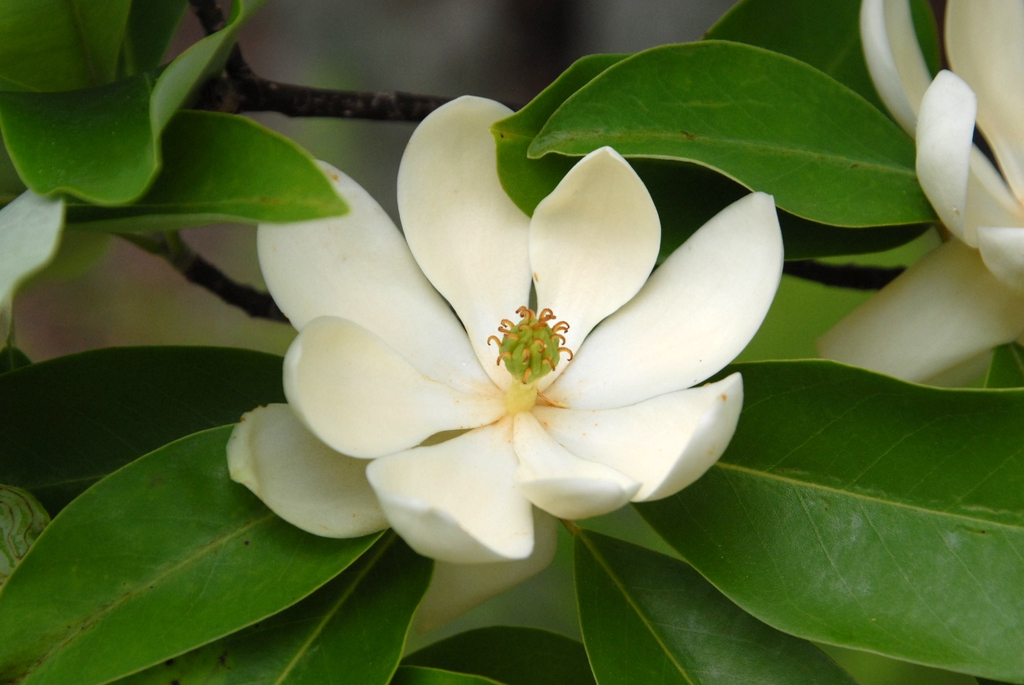
Often the tallest species in a pocosin canopy, tolerant of the wet, acidic, oxygen-poor soil that stops most other trees cold. Its cone-like fruit clusters split open to reveal bright red seeds that birds strip quickly each fall.
Below the sweetbay, a lower shrub layer fills in the rest of the space. These three species show up in pocosins across the coastal plain, and all three earn a spot in any wildlife garden with damp, acidic soil.
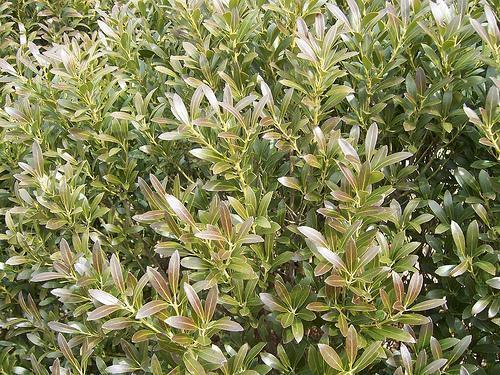
An evergreen holly that spreads by suckering into dense colonies along the edges of pocosin swamps and bogs. Its dark berries persist into winter as a food source when little else is available.
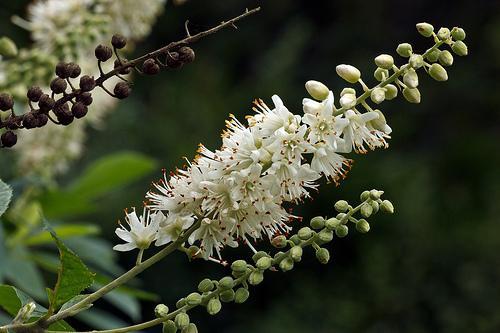
Fragrant white flower spikes open in July and August, right when most other shrubs have finished blooming for the summer, making it a late-season anchor for bees.
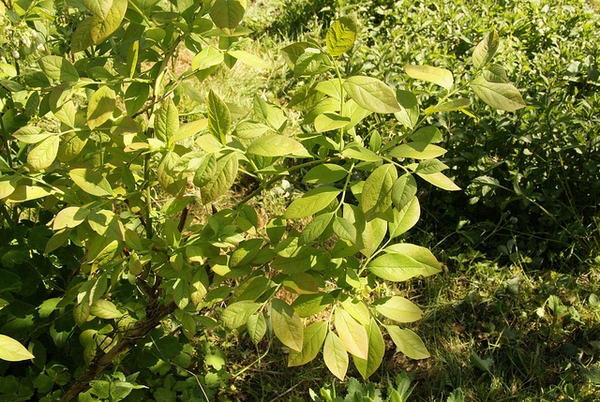
A classic pocosin understory shrub, at home in open swamps, bogs, and old fields alike. The August fruit crop feeds birds and mammals well before most garden blueberries ripen.
Fire Underneath the Water
It sounds backwards, but pocosins need fire. Peat only stays wet enough to resist burning most of the time; during drought it can dry out and ignite, and the plants growing there have adapted accordingly. Pond Pine (Pinus serotina), a Southeastern Coastal Plain endemic found nowhere outside pocosins and adjacent wet pine savannas, holds its cones sealed shut with resin until the heat of a fire melts them open to release seed. Trees that survive a burn can resprout new needles directly from scorched trunks and branches, an adaptation called epicormic sprouting (Flora of the Southeastern United States, UNC Herbarium). Without periodic fire, pocosins slowly convert to different forest types and lose the open, shrub-dominated structure that species like pond pine and sweetbay depend on.
This is the same fire-adapted world that shelters the Venus Flytrap along pocosin margins, so if you've read about that species here before, you've already met part of this ecosystem.
Related Reading
Why Venus Flytrap Only Lives Here
Sources Cited
Pocosins: Carolina Peatlands of Carbon, Culture, and History — Carolina Wetlands Association
Pinus serotina — Flora of the Southeastern United States, UNC Herbarium
Magnolia virginiana — NC State Extension Gardener Plant Toolbox
Ilex glabra — NC State Extension Gardener Plant Toolbox
Clethra alnifolia — NC State Extension Gardener Plant Toolbox
Vaccinium corymbosum — NC State Extension Gardener Plant Toolbox