


Most garden advice treats November through February as downtime. Cut everything back, wait for spring, start over. But a handful of NC natives do their best work in the cold months, when nothing else is competing for attention. They flower when there are no other flowers, hold berries when birds need them most, and turn colors that outlast every leaf on the ground.
Here are five to build a garden that still has something going on in January.
The Shrub That Blooms in the Cold
Winterberry (Ilex verticillata) drops its leaves in fall and looks like nothing for about a week. Then the bare branches light up with red berries that hold through the coldest months, right when most other food sources have dried up. Wildlife use winterberry heavily during this stretch, and more than 48 bird species rely on the shrub for cover, nesting, and the fruit itself (NC State Extension).
Winterberry is dioecious, meaning individual plants are either male or female, and only females produce berries. You need at least one male within range to pollinate several females, generally one male for every four to five female plants (NC State Extension). Skip the male and you get a nice green shrub with no show. The species is also a larval host for the Henry's Elfin butterfly, so it earns its space before the berries even show up.
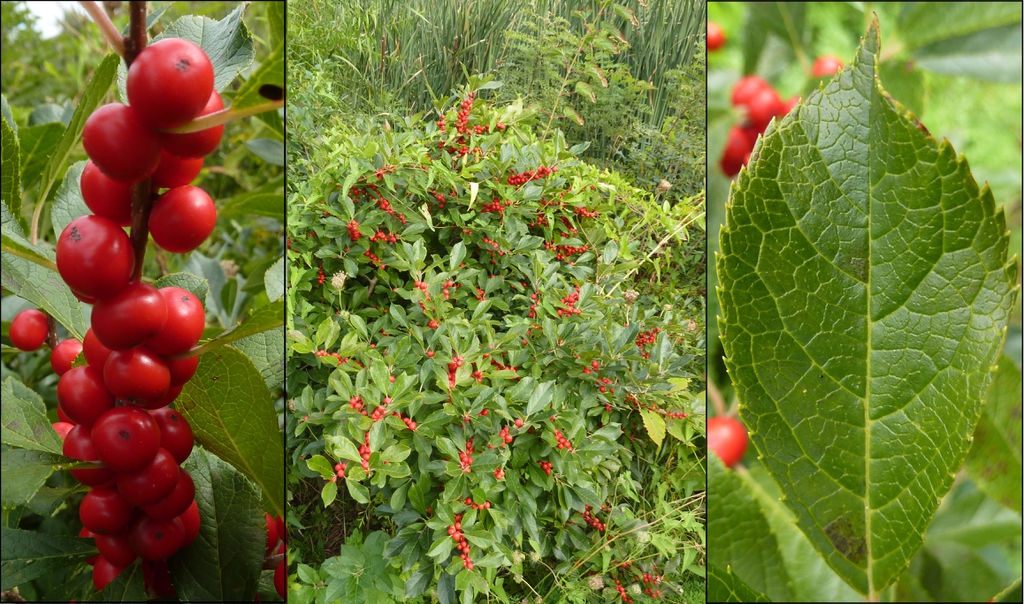
Deciduous holly that drops its leaves and shows off bare branches loaded with red fruit all winter. Dioecious, needs a male pollinator nearby to fruit.
A Flower With No Competition
The plant that blooms when it's supposed to be dormant
Witch Hazel (Hamamelis virginiana) flowers anywhere from late fall into late winter, putting out thin, strappy yellow petals when every other native has shut down for the season (NC State Extension). That timing looks like a mistake until you learn who's pollinating it. Owlet moths, a group of noctuid moths active on warmer winter nights, visit the flowers and shiver their flight muscles to raise their body temperature enough to fly and forage in near-freezing air (NC State Extension). Witch Hazel is also a larval host plant for the witch hazel dagger moth, so the relationship runs in both directions.
It's an easy plant to underestimate in a nursery pot because it looks unremarkable most of the year. The payoff comes in December, when it's often the only thing blooming in the yard.
Blooms late fall through late winter with thin yellow petals, pollinated by cold-tolerant owlet moths. Hosts the witch hazel dagger moth.
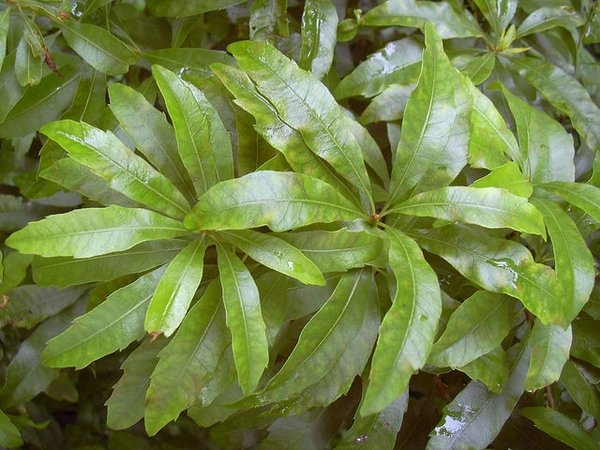
Broadleaf evergreen that holds its foliage all winter and produces waxy berries eaten by bluebirds, catbirds, and yellow-rumped warblers.
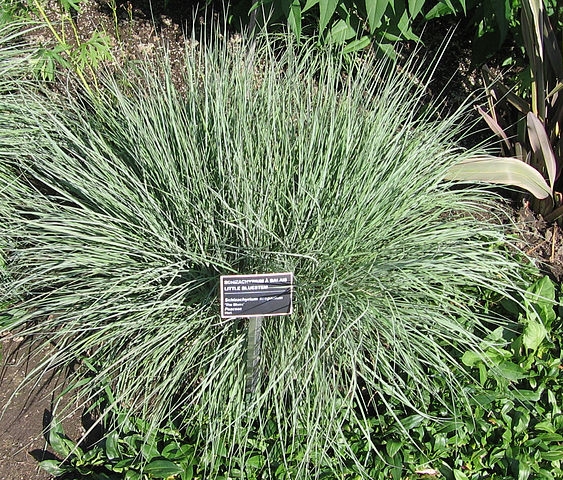
Clumping native grass that turns copper and gold in winter. The dense base shelters ground-nesting birds and small mammals through the cold months.
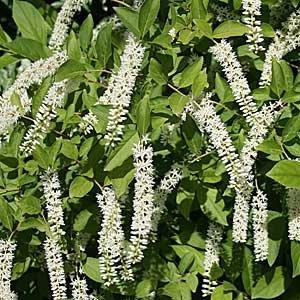
Arching shrub whose leaves turn red to purple in fall and hold that color well into winter instead of dropping right away.
Why This Matters Beyond Looks
A garden that goes fully dormant in October is a garden with nothing to offer wildlife for five months. Berries on winterberry and wax myrtle are timed to feed birds exactly when insect food has disappeared. Grass clumps like little bluestem hold seed heads and shelter that ground-feeding birds and overwintering insects depend on. None of this is decorative. It's food and cover scheduled for the months when both are scarce.
Where to Start
You don't need all five. One dioecious pair of winterberry (a male and at least one female) plus a clump of little bluestem covers both the fruiting and the winter-cover angle in a small yard. Add witch hazel if you want something blooming when the rest of the garden looks finished for the year.
Related Reading
Native Fall Wildflowers for North Carolina
Leave It Standing: What Fall Garden Cleanup Costs NC's Overwintering Wildlife
Sources Cited
Ilex verticillata — NC State Extension Gardener Plant Toolbox
Hamamelis virginiana — NC State Extension Gardener Plant Toolbox
Myrica cerifera — NC State Extension Gardener Plant Toolbox
Schizachyrium scoparium — NC State Extension Gardener Plant Toolbox