


If you've walked under a tree in the last few weeks and noticed a messy silk tent hanging off the end of a branch, you've met fall webworm. It looks alarming. It is not. This is a native insect doing exactly what it has done in North Carolina for as long as these trees have been here.
The confusion is understandable. People often mix it up with eastern tent caterpillar, assume it's a new invasive problem, or panic that their tree is dying. None of that is accurate, and the real story is more interesting anyway.
A Native Insect, Not an Invader
Fall webworm (Hyphantria cunea) is native to North America, and North Carolina populations are active all summer into fall, often producing at least two generations in a single year (NC State Extension Entomology). The adult is a small white moth that lays her eggs in a cluster on the underside of a leaf. The caterpillars that hatch are pale and fuzzy at first, and they immediately start spinning silk around the leaves they're feeding on for protection from predators.
Branch Tips, Not Trunks
This is the easiest way to tell fall webworm apart from eastern tent caterpillar, a different native species people frequently confuse it with. Eastern tent caterpillar builds its silk tent in the fork of a trunk or major limb, and it does this in spring. Fall webworm builds at the very end of a branch, wrapping the leaves out there in a loose web that expands as the caterpillars grow and need more food (NC Cooperative Extension, Lee County). If the mess is way out on the tips of the canopy in late summer, that's your answer.
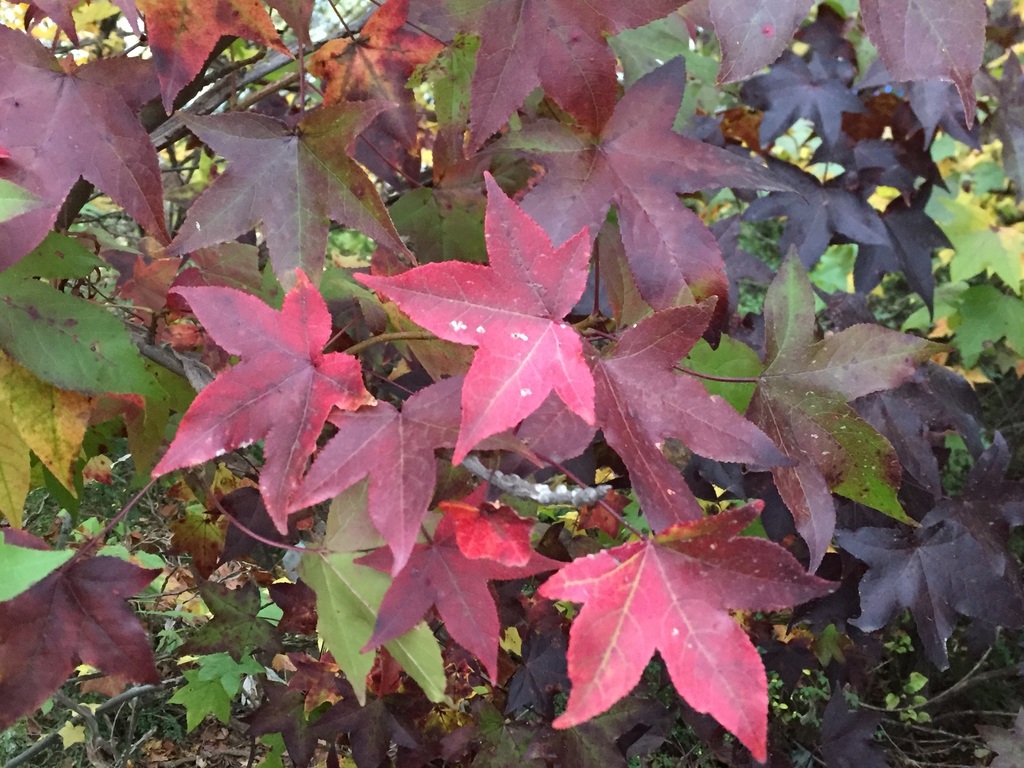
One of the trees NC State Extension entomologists most commonly find fall webworm nests on. Sweetgum is a fast-growing native shade tree, and its spiky seed balls feed goldfinches, chickadees, and other seed-eating birds through winter. A few weeks of webbing at a branch tip does not put a tree this size at real risk.
The Trees Fall Webworm Actually Uses in NC
Fall webworm is a generalist and has been recorded on hundreds of plant species, but it isn't picking targets at random in your yard. NC State entomologists and county Extension agents consistently report the same short list of favorites showing up on landscape trees here: sourwood, persimmon, cherry species, and sweetgum (NC State Extension Entomology) (NC Cooperative Extension, Lee County). All three of the trees below are NC natives worth having in a yard regardless of what visits their branch tips in August.
A small understory tree with long chains of white summer flowers that honeybees work heavily, the source of prized sourwood honey in the mountains. Brilliant red fall foliage. One of fall webworm's regular hosts, and worth planting anyway.
A tough native fruit tree that feeds deer, raccoons, opossums, and songbirds once its orange fruit ripens after frost. Frequently listed among fall webworm's most-used hosts in North Carolina, but the tree shrugs it off year after year.
Do You Need to Do Anything About It?
In most cases, no. By the time fall webworm nests show up in mid to late summer, the tree has already stored the energy it needs for the year, so the defoliation is mostly cosmetic (NC Cooperative Extension, Lee County). NC State's own entomology team puts it plainly: these caterpillars upset people because the webs are ugly, not because they seriously damage healthy trees (NC State Extension Entomology). Spraying a whole tree is rarely necessary or practical.
The exception is a young, newly planted, or already stressed tree carrying a heavy nest load. On a mature sweetgum, sourwood, or persimmon, a summer of webworm is just part of the deal of having a living tree instead of a plastic one.