


Drive along almost any road near the NC coast and you'll see it: gray-green strands draped over live oaks, swaying off power lines, hanging thick enough to hide a whole tree canopy. Most people assume Spanish moss is slowly killing whatever it's growing on. It isn't. It's not even attached to the tree the way people think.
It's Not a Moss, and It's Not a Parasite
Spanish moss (Tillandsia usneoides) is a flowering plant in the bromeliad family, the same family as pineapples. It has no roots. Instead of drawing water and nutrients out of the tree it hangs on, it uses tiny gray scales along its stems to pull moisture, minerals, and dissolved nutrients straight out of the air, rain, and windblown debris (UF/IFAS Gardening Solutions). That growth habit makes it an epiphyte, a plant that lives on another plant purely for physical support, not a parasite that taps into living tissue the way mistletoe does (Indiana University Biology Greenhouse).
A heavy load of moss can shade out leaves and add weight to already weak limbs, so a declining tree often ends up covered in it. But the moss showed up because the canopy thinned and let in more light, not the other way around. If a tree is struggling, look at the roots, the soil, or storm damage first.
A rootless, flowering epiphyte native from coastal Virginia through Texas and into the tropics. It produces a small, fragrant greenish flower each spring and spreads mostly by wind-carried fragments that catch on rough bark.
Who Actually Lives In It
This is where Spanish moss earns its keep in a coastal plain ecosystem.
Yellow-throated warblers and northern parulas build their nests directly inside mats of the moss, and Baltimore orioles weave loose strands into their hanging nests (UF/IFAS Gardening Solutions). At least three bat species, including the Seminole bat, roost in loose curtains of moss during the day, using it the same way they'd use peeling bark or a dead palm frond (UF/IFAS Wildlife Extension, Bats of Florida). Rat snakes tuck into it for cover, and one species of jumping spider, Pelegrina tillandsiae, has never been documented living anywhere except inside Spanish moss (Indiana University Biology Greenhouse).
The Trees That Wear It Best
Spanish moss needs something to hang from, and along the NC coastal plain, two native trees carry most of it.
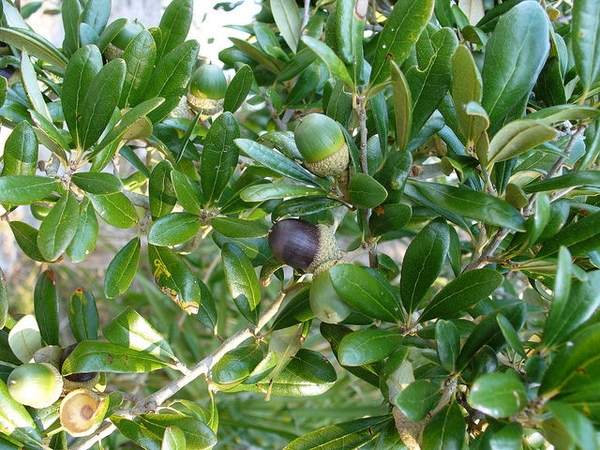
Spanish moss's classic host along the NC coast. Wide, low branches and rough bark give the moss plenty of surface to catch on and hold.
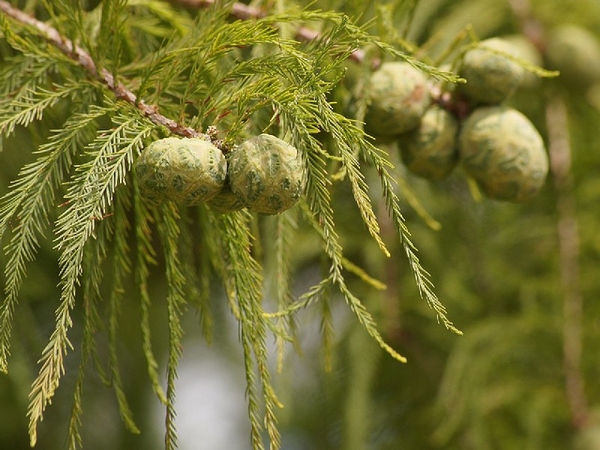
A common sight in NC's blackwater swamps, where its high humidity and open canopy are exactly the conditions Spanish moss prefers.
Why It Matters Here
Spanish moss is sensitive to air pollution, which is part of why you rarely see it thriving in dense urban areas (Indiana University Biology Greenhouse). Its native range runs along the coast from Virginia down through Texas and into the tropics, and North Carolina's coastal plain sits well inside that range (Lady Bird Johnson Wildflower Center). A healthy stand of moss on a live oak or cypress is a small sign that the air and the tree canopy around it are doing fine.