

If you've got a dense, fast-growing hedge with small white flowers and clusters of dark berries in your yard, there's a good chance it's Chinese Privet (Ligustrum sinense). It's been sold as an easy privacy screen for well over a century, and it's now one of the most aggressive invasive shrubs in North Carolina.
The good news is you don't have to give up the hedge. You just have to plant a different one. NC State Extension's own plant database flags privet as problematic and points to a handful of native shrubs that do the job better, and a few more not-so-widely-known are worth adding to your list.
Why Chinese Privet Doesn't Belong in Your Yard
Chinese Privet arrived in the United States in 1852 as an ornamental and has since spread through the eastern and southern US (NC State Extension). It grows 6 to 15 feet tall and just as wide, tolerates nearly any soil, and produces hundreds of black drupes on a single mature shrub. Birds eat the fruit and carry the seeds well beyond the yard it was planted in, which is how a single hedge turns into a thicket swallowing a creek bank or forest edge.
Once established, privet spreads by root suckers as well as seed and is very difficult to eradicate (NC State Extension). It out-competes native understory plants and forms monocultures, which means fewer of the host plants and berry sources that NC's birds, moths, and butterflies actually rely on. NC State Extension's plant toolbox now lists it directly as an invasive species and recommends against planting it in home landscapes.
NC State's Official Native Substitutes
Straight from the source: these are the natives NC State Extension names as replacements for Chinese Privet.
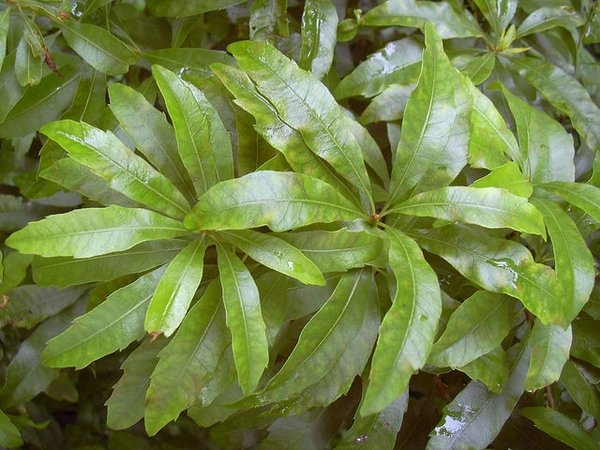
A broadleaf evergreen that takes wind, salt spray, and poor soil without complaint, which makes it a natural for coastal NC hedges and screens. Its berries feed Yellow-rumped Warblers through the winter, and it hosts the Red-banded Hairstreak butterfly.
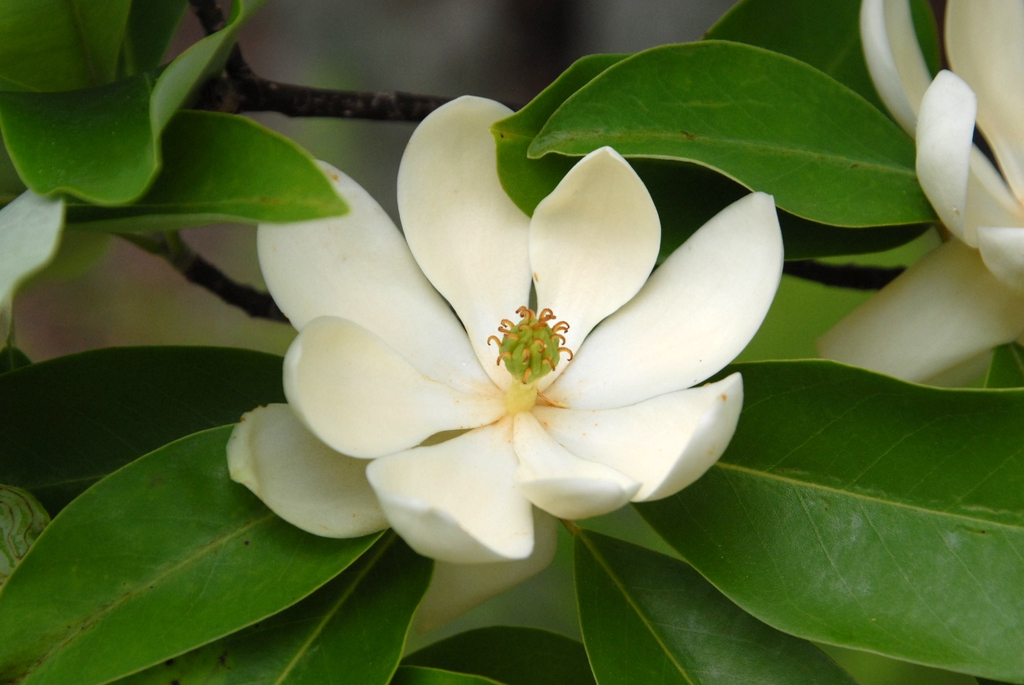
A wetland-tolerant small tree that thrives in the damp, sandy soil common across the coastal plain. It's a larval host for Spicebush and Eastern Tiger Swallowtail butterflies, and its fruit draws woodpeckers, tanagers, and cardinals.
A slow-growing native that tops out around 15 feet, with white spring flowers, dark purple fall berries, and red-purple fall color. Thrushes, cardinals, and cedar waxwings eat the fruit, and the foliage hosts Spring Azure butterflies.
Another Native Worth Considering
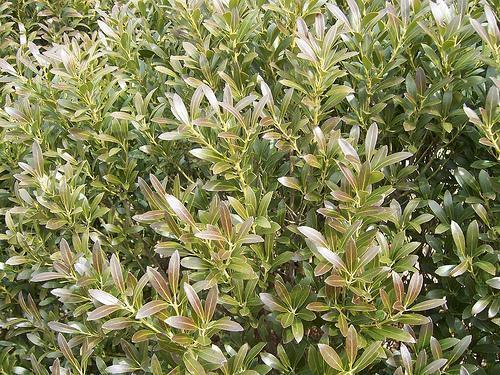
Not on NC State's official privet substitution list, but a strong evergreen screening choice for NC gardens.
Building a Hedge That Actually Helps
None of these natives grow quite as fast as privet, and that's part of the point. Privet's speed is exactly why it escapes cultivation so easily. A mixed hedge of Wax Myrtle, Sweetbay Magnolia, Blackhaw Viburnum, and Inkberry Holly takes a little more patience to fill in, but it feeds birds and butterflies year round instead of pushing them out of the understory.
If you're working with a small coastal plain lot, Wax Myrtle alone can carry most of a hedge line. It takes shearing well, holds its evergreen foliage through winter, and shrugs off the salt air that would stress out most ornamentals.
Sources Cited
Ligustrum sinense (Chinese Privet) — NC State Extension Gardener Plant Toolbox
Myrica cerifera (Wax Myrtle) — NC State Extension Gardener Plant Toolbox
Magnolia virginiana (Sweetbay) — NC State Extension Gardener Plant Toolbox
Viburnum prunifolium (Blackhaw) — NC State Extension Gardener Plant Toolbox
Ilex glabra (Inkberry) — NC State Extension Gardener Plant Toolbox