

Fall color doesn't arrive on the same day for every tree. Here in the coastal plain, one native species is already blazing scarlet while its neighbors are still green. That's not a fluke. It's chemistry, and it happens on a predictable schedule if you know which trees to watch.
The Chemistry Behind the Color Change
Leaves are green all summer because chlorophyll, the pigment that drives photosynthesis, covers up everything else going on inside the leaf. As days shorten and nights cool, trees stop producing chlorophyll and it breaks down. That unmasks carotenoids, the yellow and orange pigments that were there all along. Reds and purples come from a different pigment, anthocyanin, which most trees actually manufacture fresh in autumn using sugars trapped in the leaf (Iowa State University Extension). Sunny fall days paired with cool nights tend to produce the brightest reds, because that combination keeps sugar production high while slowing the leaf's ability to move it out.
Black Gum: The First to Turn
Nyssa sylvatica starts the show weeks before anyone else.
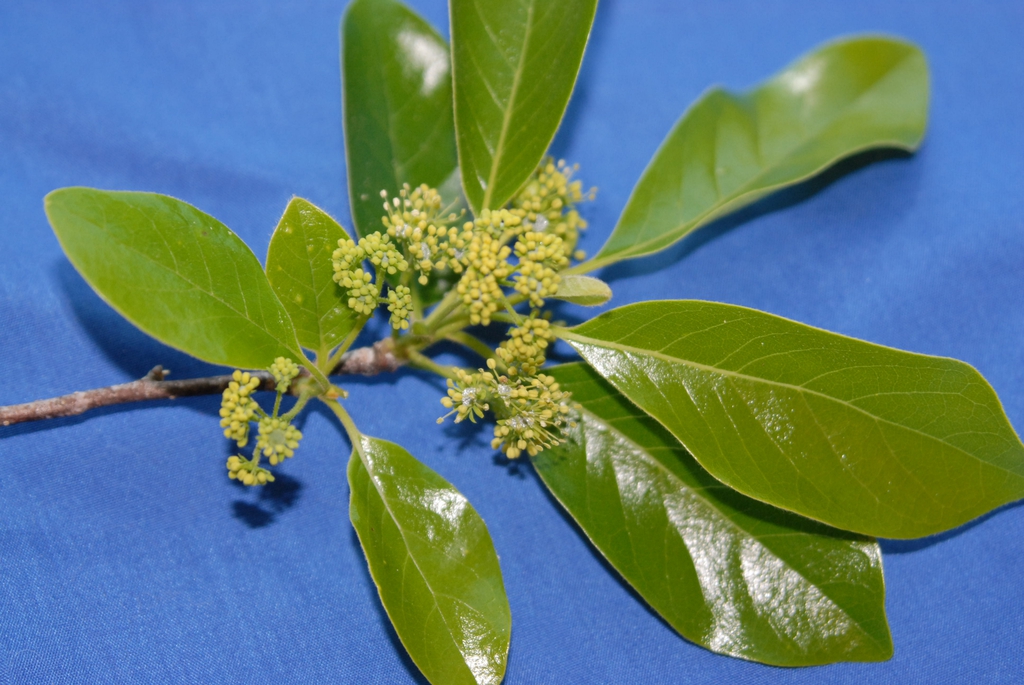
Black gum, also called black tupelo, can show its first red leaves as early as August, scattered through a canopy that's otherwise still summer green (Clemson HGIC). It's often considered the most reliable red of any native tree, and the color can hold for a month or more. The dark blue fruit that follows is high in fat, and it's an important food source for migrating songbirds moving through the region in fall (Clemson HGIC).
More Native Trees to Watch This Fall
Once black gum kicks things off, the rest of the coastal plain follows on its own timeline. These four show up next, each with a different color and a different reason to plant it.
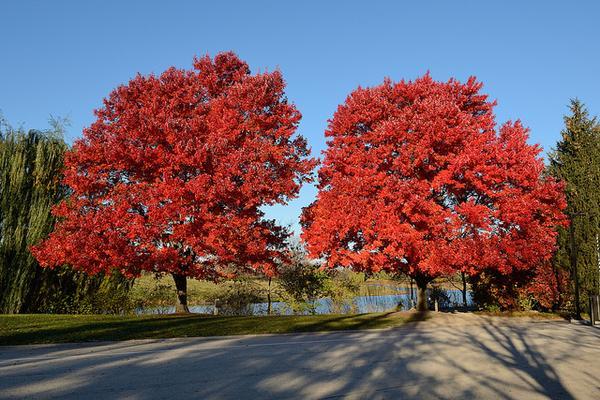
Red maple is usually the first of the maples to color, often turning brilliant red, orange, and yellow ahead of other maple species (University of Minnesota UFOR Nursery & Lab). It tolerates the wet, low spots common across the coastal plain better than most shade trees.
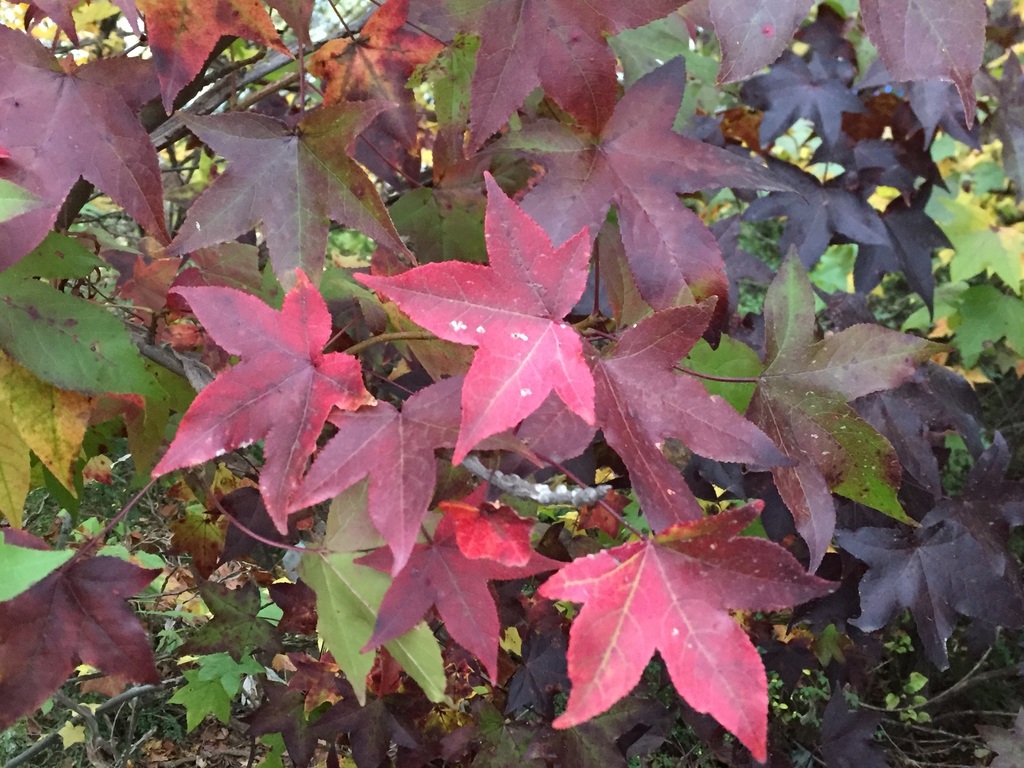
The star-shaped leaves can carry yellow, orange, purple, and red all on the same tree at once. Sweetgum holds its color longer than most natives on this list, often lasting into late fall.
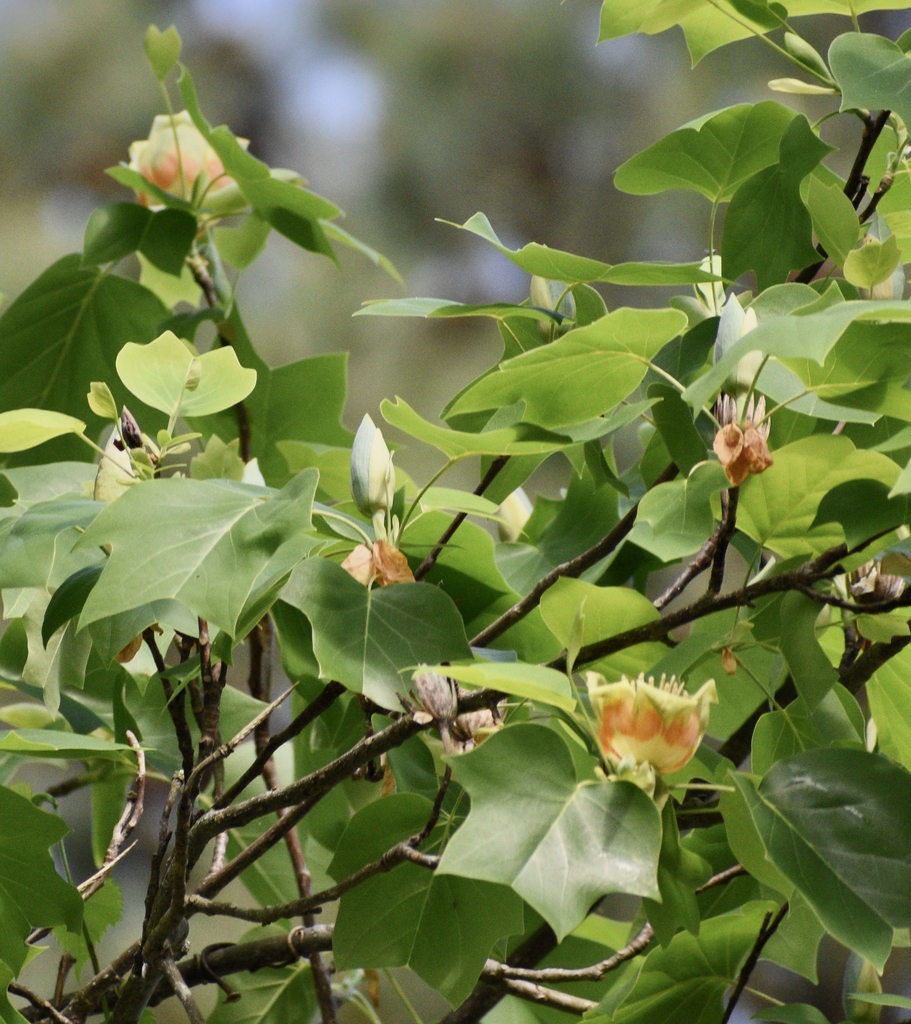
Tulip poplar turns a clean, bright gold rather than red, since it relies mostly on the carotenoids already present in the leaf. It's one of the tallest native hardwoods in the state, so the color show happens well overhead.
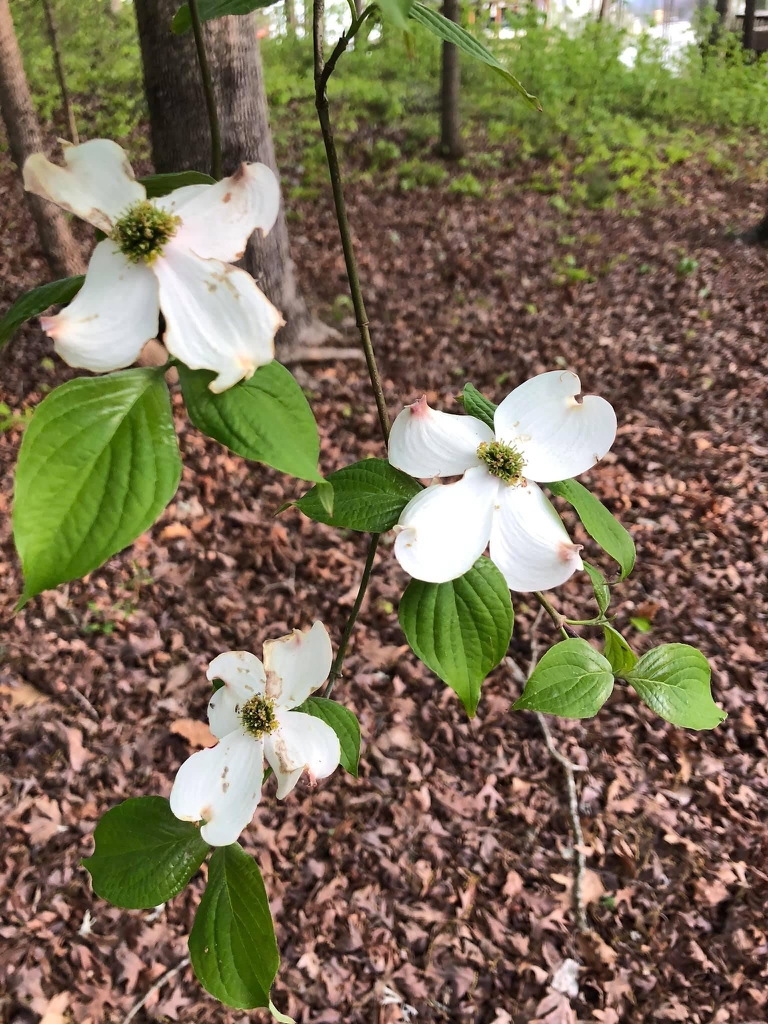
Dogwood leaves turn a reddish purple to burgundy, and the tree's bright red berries ripen at the same time (Clemson HGIC). That timing is not a coincidence, and it matters more than the leaf color does.
Fall Color Feeds Wildlife Too
The same trees putting on a color show are also running a food pantry. Dogwood berries ripen in September and October, right as songbirds are moving south, and native berries like these run far higher in fat than fruit from non-native landscape shrubs, which is exactly what a bird needs to fuel a long flight (NC Cooperative Extension, Franklin County Center). Black gum's fruit works the same way earlier in the season. If you're planting for fall color, you're also planting a fueling station for birds passing through the coastal plain.
Related Reading
Native Oaks of North Carolina: Keystone Trees for Wildlife
Native NC Plants That Feed Birds: A Season-by-Season Guide
Sources Cited
Black Gum — Clemson Home & Garden Information Center
The Science Behind Fall Color — Iowa State University Extension
Dogwood — Clemson Home & Garden Information Center
Woodland Autumn Berries and Flowers — NC Cooperative Extension, Franklin County Center
Red Maple — Acer rubrum — University of Minnesota UFOR Nursery & Lab