

Walk the maritime forests and sandy woodlands of coastal North Carolina and you've probably brushed past a yaupon holly without knowing it. This unassuming evergreen shrub holds a distinction no other plant native to the Southeast can claim: its leaves contain caffeine.
That single fact turns a common hedge plant into one of the more interesting native species growing in Wilmington yards right now. Here's what yaupon holly actually is, the history behind it, and two evergreen neighbors that pair with it for year-round structure and wildlife value.
A Native Plant With a Chemical Quirk
Yaupon Holly (Ilex vomitoria) is a broadleaf evergreen shrub or small tree in the holly family, native from Virginia down through Florida and west into Texas. It thrives in full sun to deep shade, tolerates salt spray and drought, and handles the sandy, well-drained soils common across the coastal plain without complaint. On the plant itself, the leaves are small, glossy, and rounded, without the sharp spines you'd expect from a holly.
What sets yaupon apart is chemistry, not appearance. Yaupon is the only plant native to the southeastern United States that naturally contains caffeine (Florida State University). Every other caffeinated plant familiar to us, coffee, tea, yerba mate, kola nut, is native somewhere else in the world. This one has been growing in NC dunes and pocosins the whole time.
The Black Drink
An overlooked piece of Southeastern history
Indigenous peoples across the Southeast, including the Apalachee, Creek, Seminole, and Muskogee, brewed dried yaupon leaves into a ceremonial beverage used in purification rituals and diplomatic gatherings (Florida State University). English colonists called it the black drink for the dark color of the brewed tea, while Spanish colonists used the term cassina, borrowed from the Timucua language (Florida State University). The species name vomitoria comes from its historical use as a ceremonial emetic when consumed in large quantities, though the plant itself doesn't actually cause vomiting; that effect came from the volume consumed or other added ingredients (Lady Bird Johnson Wildflower Center). In smaller, everyday amounts, the leaves simply make a mild, naturally caffeinated tea.
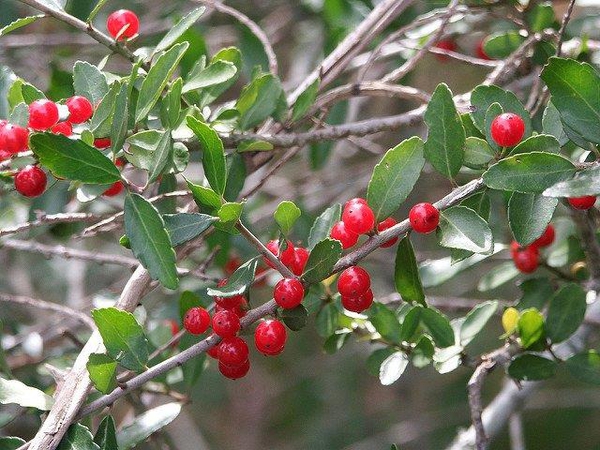
A dioecious evergreen shrub or small tree reaching 10 to 20 feet. Female plants produce bright red drupes that ripen in fall and hang on through winter, feeding songbirds and small mammals long after most other fruit is gone.
What Yaupon Does in the Yard
Beyond the caffeine story, yaupon earns its place in coastal NC landscaping on its own merits. It's dioecious, meaning you need both a male and a female plant nearby for the females to set fruit (NC State Extension). Those fruits matter ecologically: they're eaten by songbirds and small mammals through the winter, the spring flowers draw in bees and butterflies, and the shrub serves as a larval host plant for both the Henry's Elfin and Holly Azure butterflies (NC State Extension). It also supports a specialized native bee in the genus Colletes that depends on holly pollen (NC State Extension).
One practical note before you plant it near the house: yaupon carries a high flammability rating and shouldn't go inside the defensible space around a home (NC State Extension). It's an excellent screen or hedge plant further out in the yard, just plan the placement with that in mind.
Building an Evergreen Understory
Two native companions that hold their structure through winter
Yaupon rarely grows alone in a healthy coastal plain plant community. Pair it with other broadleaf evergreens for a layered look that still reads green and alive in January, when most of the garden has gone dormant.
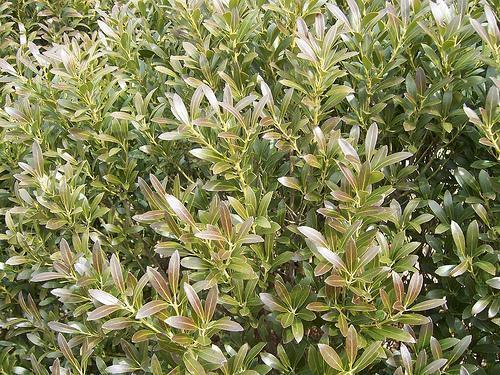
A smaller, spineless holly with jet-black fall fruit eaten by bobwhite quail, wild turkey, and songbirds. Native Americans also brewed its leaves into a black tea, giving it the old common name Appalachian tea.
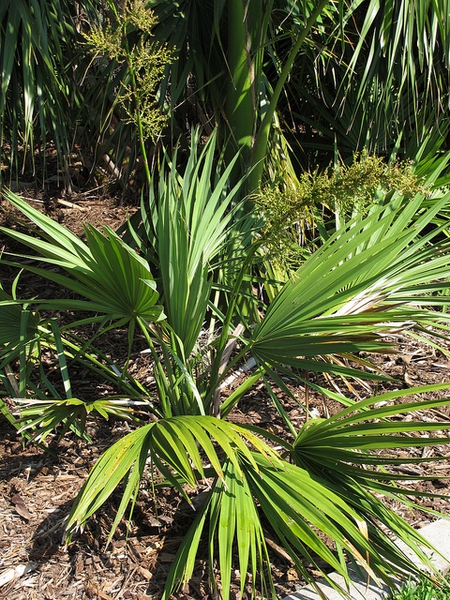
North Carolina sits at the very northern edge of this palm's range. Its fan-shaped leaves stay attractive through winter, and its fall fruit feeds robins, raccoons, and other wildlife.
Both of these thrive in the same conditions yaupon does: acidic, sandy soil, part shade to full sun, and the occasional wet spot. Layer them together in a naturalized bed and you've built cover and food for wildlife through the leanest months of the year, all from species that already belong here.
Related Reading
Native Shrubs for North Carolina Coastal Gardens: Six Species Worth Growing
Don't Let Your Garden Go Quiet: Native Plants for Fall and Winter Interest in NC
Sources Cited
Ilex vomitoria — NC State Extension Gardener Plant Toolbox
Ilex glabra — NC State Extension Gardener Plant Toolbox
Sabal minor — NC State Extension Gardener Plant Toolbox
Yaupon Holly — Florida State University, Rooting & Branching Public Art Project
Ilex vomitoria — Lady Bird Johnson Wildflower Center, University of Texas at Austin