


Most yards default to a wall-to-wall lawn because that's the standard, not because it's the best use of the space. A few grouped beds of native plants read as intentional and support far more life, while the rest of the yard can stay open grass.
Think of the lawn as a rug, not the whole floor. A rug has an edge and sits inside a room, giving your eye somewhere to land. A lawn works the same way once it frames a few well-placed plant groupings instead of covering every inch.
Grass Alone Isn't Doing Much
A traditional lawn asks for weekly mowing, regular fertilizer, and enough water to stay green through a coastal Carolina summer. It gives almost nothing back: no nectar, no seeds, nowhere for an insect to lay eggs. Low-input lawn alternatives that swap some turf for a mix of native, drought-adapted plants use an estimated one-quarter to one-third the water of a conventional lawn once established (Oregon State University Extension). None of this is an argument for tearing out every blade of grass. It's an argument for giving some of that square footage back to plants that do more work.
Design in Groups, Not Rows
Odd numbers read as natural. Pairs and straight rows read as planted.
Landscape designers plant in threes, fives, and sevens because odd-numbered groupings avoid the mirrored symmetry that signals "a person put this here." A single Joe-Pye Weed looks accidental. Three of them, staggered instead of lined up, look like a decision.
Pick one bed to start. Choose a spot that gets at least six hours of direct sun, and outline the shape with a hose or a length of rope before digging anything. Curved, organic edges read better than straight ones, and a smaller bed you actually finish beats a big one you abandon halfway through.
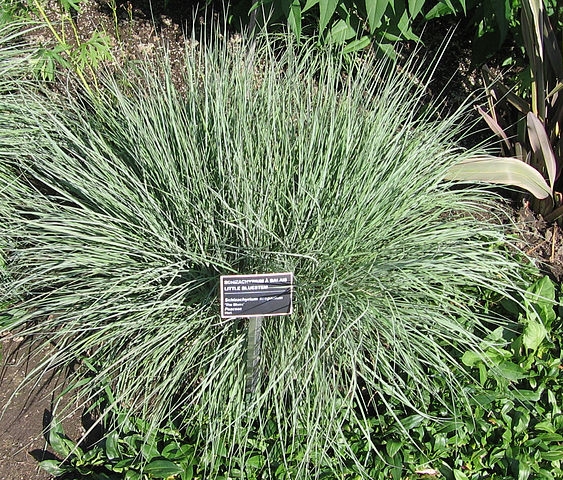
This clump-forming grass grows two to four feet tall and holds its upright shape through winter, turning copper-orange in fall when most flowering perennials have already died back. It tolerates heat, humidity, salt spray, and heavy clay, which makes it a dependable anchor for a new bed. Group five to seven together first, then add flowering perennials around the edges.
Five Natives Built for Grouped Beds
Layer bloom times so something is flowering from late spring through the first frost, and don't skip the plants working underground. Wild Indigo is a legume, and like other legumes it can host nitrogen-fixing Rhizobium bacteria in its root nodules, which pull nitrogen from the air and convert it into a form other plants can use (NC State Extension Cover Crops Program). Rudbeckia, the genus behind Black-Eyed Susan, is considered a keystone plant group: it supplies pollen to at least 29 specialist bee species and serves as a larval host for 20 or more butterflies and moths (University of Georgia State Botanical Garden). And Joe-Pye Weed keeps blooming into September, right as monarchs begin their fall migration south and depend on late-season nectar plants like this one to fuel the trip (Xerces Society).
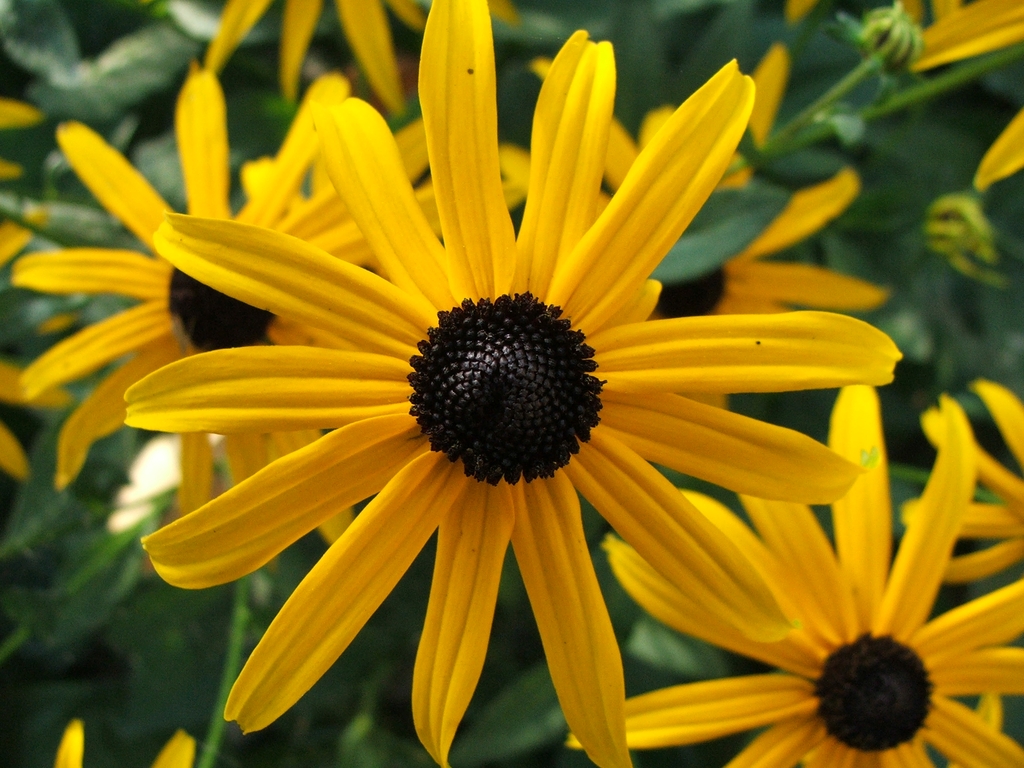
A biennial that blooms summer into fall and reseeds readily, so a group of three usually becomes a group of a dozen within a couple of seasons. Leave the seed heads up for finches.
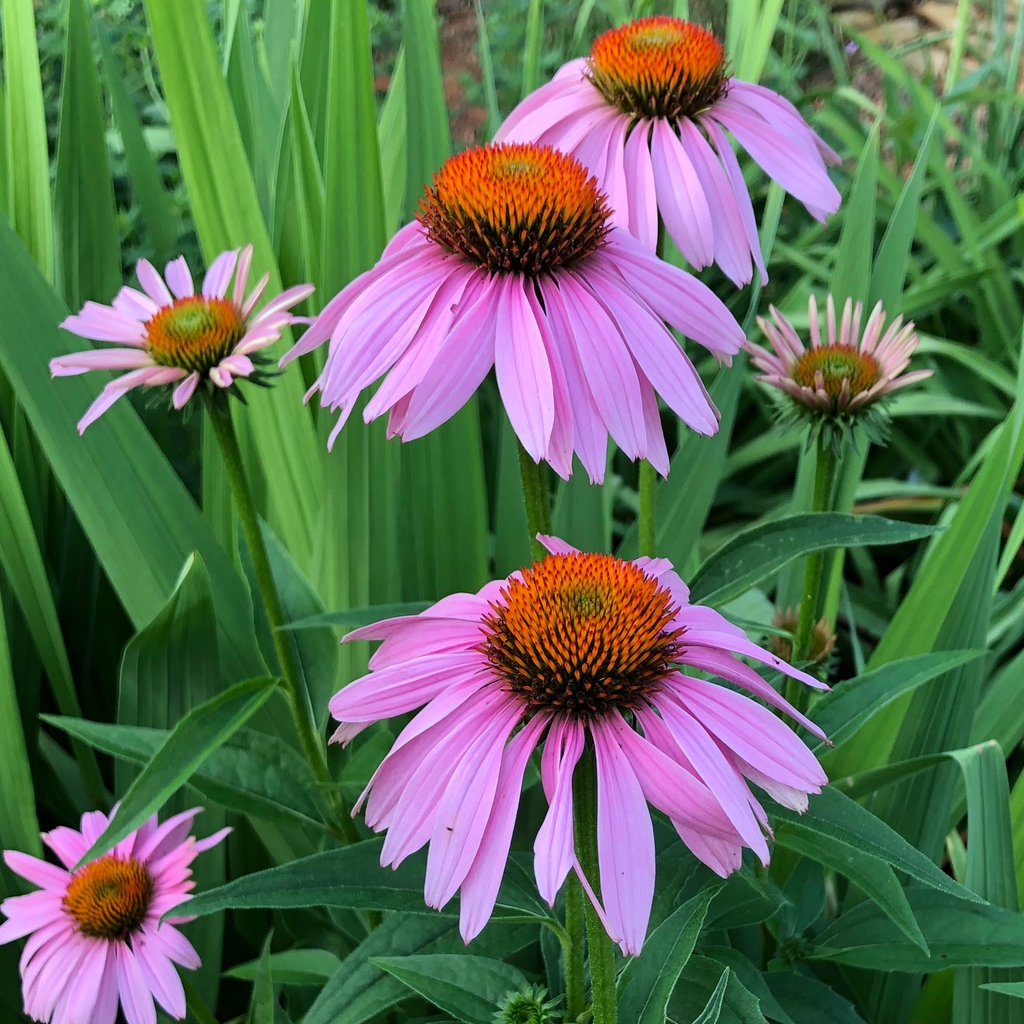
Holds its cone-shaped seed heads well into winter, worth leaving up rather than deadheading. Native across the eastern and central US and well adapted here, though it's more a Piedmont-and-inland regular than a coastal plain specialist, so give it well-drained soil.
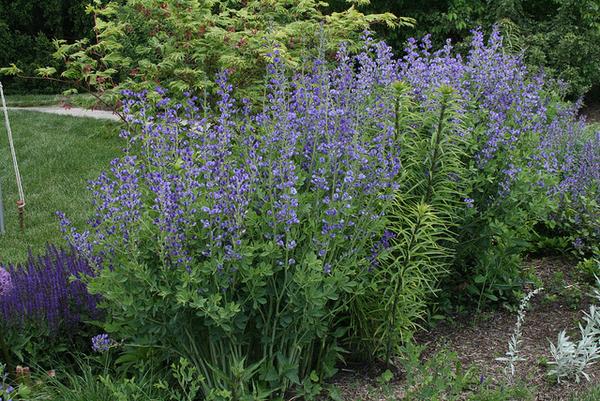
Grows a taproot deep enough that mature plants rarely need dividing or supplemental water. Works as a structural anchor in a grouped bed the same way Little Bluestem does, just with spring flowers instead of fall texture.
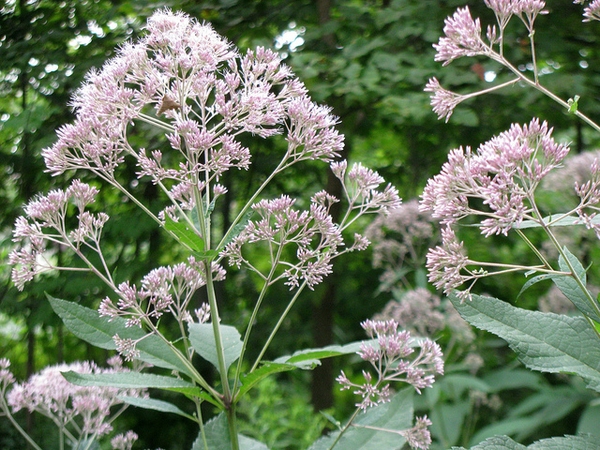
Give it room. Mature plants reach four to seven feet, with dusty pink-purple flower clusters that hold up the back of a grouped bed from midsummer through early fall.
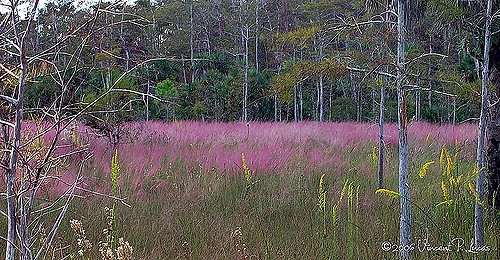
Native to the coastal plain from Connecticut to Texas. Clumps stay green and unremarkable most of the year, then send up airy pink-purple plumes in fall. Tolerates salt spray, which makes it one of the more forgiving choices near the water.
Where to Put the First Bed
A fence line, the space around a mailbox, or a stretch of grass that struggles anyway (deep shade under a tree, a low spot that stays wet) are easier starting points than cutting into the middle of an open lawn. Water new plants through their first summer. After that, an established native bed needs less attention than the grass it replaced, not more.
Related Reading
Native Plants for Sandy Soil in North Carolina
Zone 8b Planting Guide: Native Plants for Coastal North Carolina
Sources Cited
Ecolawn: Less Work and Water — Oregon State University Extension
Nitrogen Fixation — NC State Extension Cover Crops Program
Georgia Pollinator Plants of the Year — State Botanical Garden of Georgia, University of Georgia